
Resident urges Appling County to create animal-control unit amid reports of aggressive stray dogs
Get AI-powered insights, summaries, and transcripts
Subscribe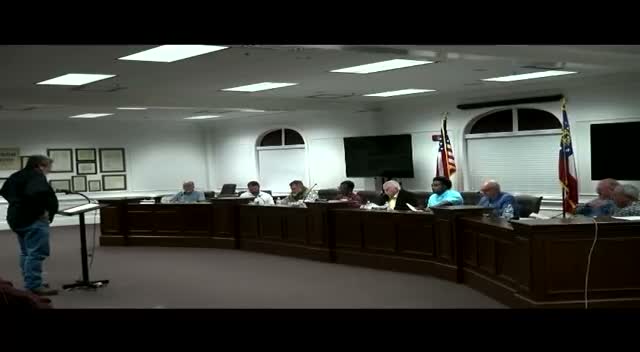
Summary
A resident told commissioners the county faces a large stray-dog problem, offered a draft ordinance and proposed either a volunteer animal-control team or deputy-assigned enforcement; commissioners said the county attorney and staff will review the materials.
An Appling County resident urged the commission to establish county-level animal control and presented a draft ordinance and funding ideas after recounting local attacks on pets, livestock and people.
Speaking during public comment, the resident (Speaker 4) said the county has many packs of loose dogs and estimated the homeless-animal population could range from "1000 to 2,000 dogs and cats". He described multiple livestock losses and personal confrontations, and said local shelters and rescues are full. "We must have an an county animal control," he said, and recommended "4 or 5 people, volunteers" who could be deputized by the sheriff or assigned deputies to perform animal-control duties.
The speaker also outlined proposed financing mechanisms including dog registration fees, dangerous-dog permits and partnerships to subsidize microchipping, spay/neuter services and a possible mobile spay/neuter unit. He said he provided commissioners with a packet containing a draft ordinance, shelter/rescue contact lists and operational suggestions.
The chair thanked the presenter and said the county attorney and manager would review the material. "I appreciate the work you put into this, and I will read all of it," a commissioner said. No formal action or vote was recorded at the meeting; commissioners indicated staff and legal review would be the next step.
Key claims and context
- Claim: The resident estimated between 1,000 and 2,000 stray dogs and cats in the county and described attacks on people and animals. This figure came from the speaker's estimates and was not independently verified in the meeting.
- Claim: Current shelters and rescues are full. The presenter supplied a list of local rescues and said the city shelter was at capacity.
- Proposal: Establish a county animal-control program (volunteer or sheriff-deputized), plus funding via tags and permits and expanded spay/neuter access.
Commissioners acknowledged receipt of the packet; staff and the county attorney said they would review the draft ordinance and related materials. The transcript shows no formal motion, ordinance reading or vote during the meeting.