Get Full Government Meeting Transcripts, Videos, & Alerts Forever!
Get email alerts on the Safety Investigations topic
No spam. Unsubscribe anytime.
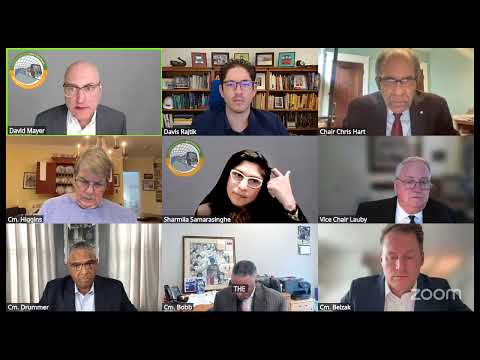
WMSC adopts four investigation reports after commissioners press for action on red-signal overruns
Summary
After extended questioning about red-signal overruns and human-factor causes, the commission unanimously adopted four investigation reports that found loss of situational awareness, incorrect radio readbacks, and procedural noncompliance as probable causes in several events.
The Washington Metrorail Safety Commission reviewed several recent safety-event investigations and unanimously adopted four reports that examine red-signal overruns and other incidents.
Leading the presentations, Mister Quigley summarized trends: between Jan. 1 and Nov. 1, 2024, WMATA reported 14 red-signal overruns; in the same interval in 2025 there were 10. WMSC investigators reviewed events and found recurring contributing factors including miscommunication, loss of situational awareness and failure to follow written procedures.
On Investigation Whiskey0407 (yard overruns on Feb. 23, 2025), Quigley said an incorrect radio readback by an operator was not corrected and led to three signals being overrun; the operator and interlocking operator were removed from service for post-incident testing and retraining. "Based on the investigation, the probable cause was the train operator's loss of situational awareness," Quigley told commissioners.
Investigation Whiskey0408 (Feb. 28, 2025) involved a Train 792 movement from Vienna that passed red signal Kilo 0802 after a stop-and-proceed move was initiated without proper authorization; cab video showed an operator focused on the console and the probable cause was identified as loss of situational awareness.
Commission response: commissioners pressed for stronger, data-driven supervisory oversight and asked whether incidents were concentrated among repeat operators or distributed more broadly; the investigation team said the issue is broad with some repeat offenders but often affects newer operators and those still gaining territory familiarity. Commissioners proposed clearer managerial observation, targeted training, and cross-cutting trend analyses so the WMSC and WMATA can track whether corrective actions are reducing incidents.
Votes: the commission voted to adopt reports Whiskey0407 through Whiskey0410 in a single motion; the vote was unanimous.
Next steps: WMSC staff said they will pursue more analytic trend work, consider targeted supervisory interventions and continue to use CAPs, audits, and inspections to verify corrective actions are implemented.