
Elgin podcast explains how to find, read and participate in city council meetings
Get AI-powered insights, summaries, and transcripts
Subscribe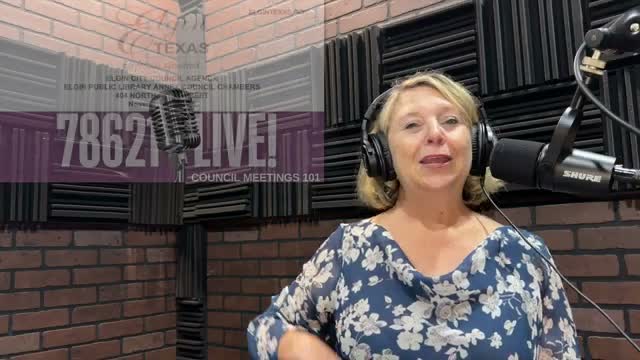
Summary
City of Elgin public information officer Stacey Ford Osborne released a podcast guide walking residents through where to find agendas and agenda packets, public hearing vs. public comment rules, sign-up and timing procedures, the consent agenda, and executive session limits.
Stacey Ford Osborne, public information officer for the City of Elgin, released a recorded guide that explains how residents can find and read city council agendas, prepare comments and follow council actions. The podcast, which the city will pin to its YouTube channel, uses a recent Nov. 17 council meeting as an example and walks listeners through each part of a typical agenda.
Osborne told listeners the easiest way to find agendas is via the city's Meetings & Agendas calendar on the Elgin website, where each meeting entry links to the agenda and the full agenda packet. "If you don't want to see the backup information and you don't want to read the agenda packet, they do pass out the agenda at the city council meetings," she said. She noted agenda packets can be large (154 pages in the Nov. 17 example) and that the packet contains staff executive summaries, proposed ordinance text and attachments such as maps.
The podcast stresses two rules for public participation. First, agendas and agenda packets are posted five business days ahead of meetings so the public has time to review materials. Second, Osborne said, "All of our city council meetings are recorded and posted on our YouTube page," so residents can watch proceedings after the fact. For real-time participation, she explained how to sign up for email alerts using the city's 'Notify Me' feature to receive notice when agendas are published.
Osborne outlines the difference between public hearings and the public comment period. During a public hearing the mayor reads the official notice and opens the floor for comment; council does not act or deliberate during that hearing but may later consider comments when the item returns for action. For general public comment, she said speakers must give their name and address for the record, and "in the city of Elgin, everyone who speaks has 3 minutes to do so." Speakers should arrive about 30 minutes early to sign in for the public comment period; speaking at a public hearing generally does not require prior sign-up.
The guide also explains standard agenda sections: call to order and roll call (used to record attendance for the public record), invocation and pledges, announcements (community events and presentations submitted to the city secretary at least two weeks before a meeting), the city manager's report, the consent agenda and new business. Osborne described the consent agenda as bundled, noncontroversial items typically approved together; in the example meeting six consent items were approved in a single vote. New business includes ordinances (formal changes to the city's code), resolutions (authorizations such as canvassing election returns or delegations to the city manager), and presentations or staff reports.
On closed meetings, Osborne said council may retire to executive session for specified subjects under Texas law (for example, real property, personnel matters and consultations with legal counsel) and must cite the relevant section of the Texas Government Code before doing so.
The podcast ends by inviting listeners to view the pinned episode on the city's YouTube channel and to use the website to read agenda packets five business days before meetings. "If you want to prepare to come and make a public comment, this is your opportunity to prepare for that as well," Osborne said.