
4‑H leaders and volunteers urge caution as Bonner County debate over fair governance unfolds
Get AI-powered insights, summaries, and transcripts
Subscribe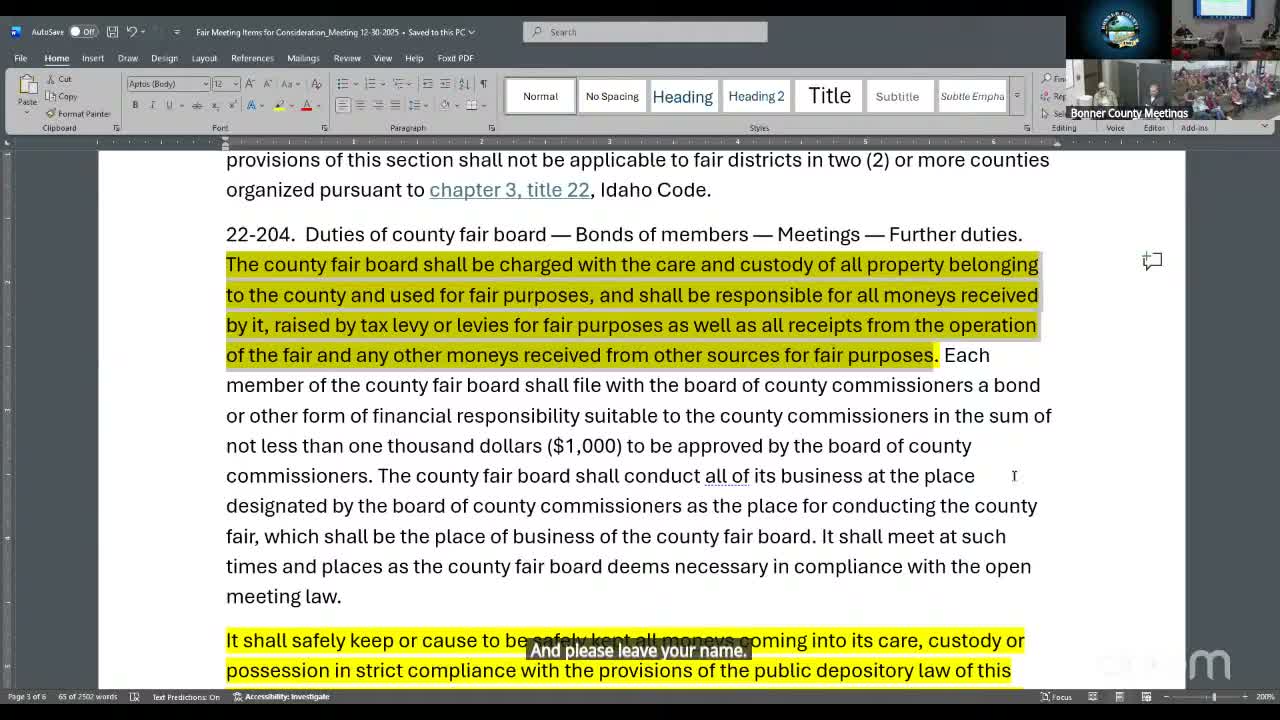
Summary
Fair Board members, 4‑H leaders and community volunteers told commissioners they rely on fairgrounds access and volunteer labor and warned that changing staff reporting or funding arrangements could harm low‑cost youth programs and year‑round events.
Bonner County residents and fair volunteers used the county's Dec. 30 special meeting to press commissioners for careful, transparent action after a governance dispute over the County Fair and fairgrounds.
At issue: Several commissioners and county attorneys debated whether Idaho's fair statutes allow a Fair Board to manage year‑round events and property, or whether the Fair Board's authority should be limited to the annual county fair. That legal question matters because the Fair Board oversees property maintenance, receives some event revenues and historically has had a role in hiring or overseeing the fair manager.
Voices from the community: Fair Treasurer Stacy McBrayer said the Fair Board had previously retained outside counsel and that the board cannot function "without staff"; she noted the Fair Board's bookkeeping and operational work are intensive and produce much of the fairgrounds's revenue stream. Ben Wood and other Fair Board members described confusion that followed a Dec. 4 vote changing the fair manager's reporting line, saying the Fair Board temporarily paused bill payments while seeking clarity.
4‑H concerns: Multiple 4‑H volunteers and leaders told commissioners they depend on low‑cost access to fairgrounds for youth programs and competitions. "If we would have to start paying for events to be at the fairgrounds, there is no money for it," said a 4‑H volunteer speaking in public comment, warning that horse camps and project competitions could become unaffordable for many families.
Budget and accountability: Commissioners and commenters discussed enterprise‑fund accounting versus levy funding. One commissioner said the initial draft budget showed a projected $65,000 deficit and that actual shortfalls later narrowed to about $41,000; several speakers urged a five‑year facilities and capital plan to anticipate large repairs and avoid ad‑hoc requests.
What residents asked for: The public called for: a) a clear written legal opinion to settle statutory interpretation; b) improved transparency so commissioners can see enterprise and levy spending side‑by‑side; c) explicit delineation of which fairgrounds responsibilities fall to the Fair Board, the county and the fair manager; and d) protections to keep 4‑H events affordable.
Outcome for community: Commissioners agreed to obtain a written legal opinion and to pause additional structural changes until the opinion is delivered. Public commenters said they welcomed further clarity but urged the county to minimize disruption while volunteers and event organizers finalize plans for the coming year.