St. Augustine Beach commission opts to delay substantive charter amendments, targets March 2027 special election
Loading...
Summary
After weeks of deliberation, commissioners agreed to prioritize minor, non‑substantive charter edits now and to pursue a special election in early 2027 for larger changes — including possible term‑limit proposals — while staff will draft ballot language and hold a public workshop.
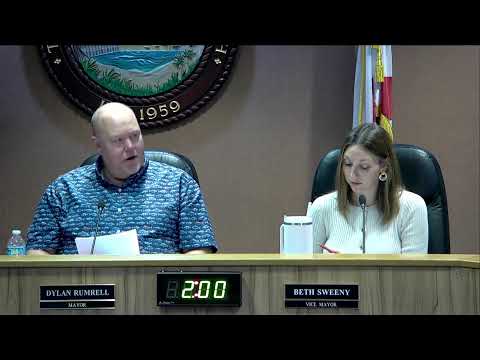
The City of St. Augustine Beach commission on Dec. 1 decided to postpone most substantive city charter changes until 2027 and directed staff to draft ballot language and hold a public workshop to narrow priorities.
Mayor Rum Rum and city staff said the supervisor of elections advised that a crowded 2026 ballot tied to state and federal races could depress turnout and make clear ballot language difficult; commissioners discussed two options: place a short list of high‑priority items on a 2026 ballot or hold a stand‑alone special election in early 2027. "She's like, start seeing that stuff by February, March," Mayor Rum Rum said, summarizing the supervisor's timeline.
City Attorney (as identified in the transcript) told the commission that editorial or grammatical fixes may be adopted administratively or by ordinance, but any substantive changes must go to referendum. "If it's an article, or a misspelling or a gender neutrality [change]," the attorney advised, those can be handled without voter approval; "any substantive at all would be for referendum." Commissioners therefore directed staff to prepare draft ballot language for review and to identify a short list of possible high‑priority items—term limits, city manager and police‑chief provisions and other flagged topics—while considering a targeted special election in March 2027.
Several commissioners said a hybrid approach could work: move a few non‑controversial edits quickly while reserving larger or more complex proposals for a separate election. Commissioner George said residents have already expressed strong interest in term‑limit proposals and urged the commission to plan outreach. Former charter committee member Nick Bender urged the commission during public comment to move promptly on term limits and recommended splitting smaller items onto an earlier ballot and larger items later.
The commission agreed to schedule a workshop to refine which items can be handled administratively or by ordinance and which should be placed on a referendum ballot. Staff will also consult the supervisor of elections to confirm ballot capacity and costs before the next meeting.
Next steps: staff will draft ballot language and return with a proposed short list and a recommended timeline for community outreach and a possible March 2027 special election.