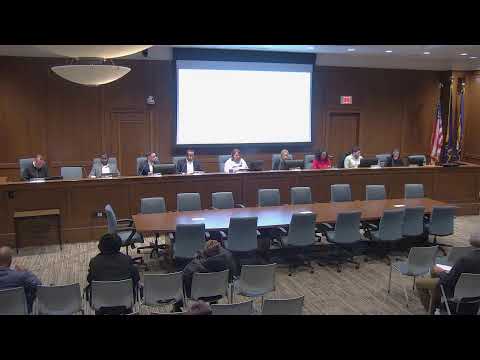
Lancaster City Council adopts 2026 budget after amendment to fund low-income programs; sets property tax rate
Loading...
Summary
Lancaster City Council approved the 2026 budget (Admin Bill 11-20-25) as amended to add a $300,000 community-involvement line funded from reserves, and separately adopted the 2026 millage rate (Admin Bill 12-20-25) at 12.64 mills. Councilor Arroyo’s amendment directs expected earned-income-tax revenue toward direct resident assistance instead of an earned-income-tax exemption.
Council voted Dec. 9 to adopt the city’s 2026 budget after approving an amendment that directs $300,000 from reserve usage into a new "administrative services — community involvement" line.
The budget ordinance (Administration Bill 11-20-25) was presented for final passage. Councilor Arroyo moved to increase the general-fund reserve-usage line by $300,000 and to create a new expense account for community-involvement programs. "After reviewing those presentations, it's clear that the administrative cost, collection fees, and staff capacity needed to manage such an exemption would ultimately reduce the benefits of the very residents that we're trying to support," Councilor Arroyo said when explaining the amendment, stating the funds should instead be used for direct supports such as a critical repair program, utility assistance or rental assistance.
The amendment passed on a roll call after brief public comment and council discussion; the council then approved the full 2026 budget as amended. During the final vote, Councilor Diaz registered a dissenting vote; other members voted to approve the amended ordinance.
Councilors and staff noted the budget aims to maintain core services and includes strategies to fully staff the police bureau in 2026. Councilor Hirsch cautioned that dipping further into reserves requires monitoring: "the projection is near spot on for 2025... but if the economy sours or if people are earning less, we have to keep an eye on that," he said, noting long-term projections showing reserve stress over a 10-year horizon.
In related action, council adopted Administration Bill 12-20-25 to set the 2026 property tax rate at 12.64 mills (12.64 dollars per $1,000 of assessed value expressed as mills); council members noted the package contains no property-tax or earned-income-tax increases and thanked staff for budgeting efficiencies.
Public commenters urged follow-up on budget questions and implementation details. Darlene Byrd said earlier requests for information on ARPA interest and other budget items had not been answered: "No one ever got back to me," she told council. Tony Dastra, while supportive of some budget moves, urged consideration of longer-term measures such as rent control.
The council’s action completes city-level appropriations for 2026; staff and the incoming administration were expected to implement the programs funded by the new community-involvement line.