
Council approves year-end appropriations, reauthorizes opioid-settlement funds for officer mental-health support
Get AI-powered insights, summaries, and transcripts
Subscribe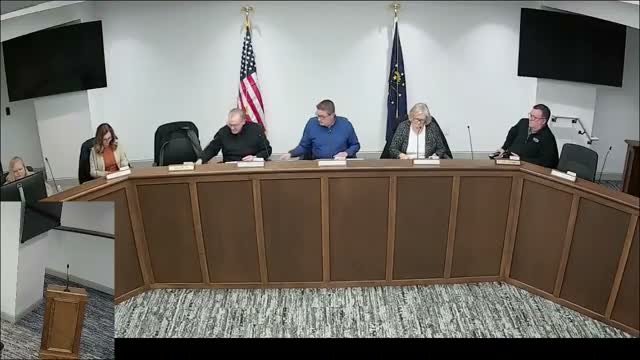
Summary
Clinton County council approved Ordinance 2025-24 to reappropriate $10,000 in opioid settlement funds for sheriff’s department mental-health assistance and passed a slate of year-end interfund transfers; both measures passed unanimously, 6–0.
Clinton County council approved a package of year-end budget moves on a unanimous vote, reauthorizing funds from an opioid settlement and approving a series of interfund transfers to close out the year.
The council approved Ordinance 2025-24 to reappropriate $10,000 from prior opioid settlement proceeds to the sheriff’s department for mental-health assistance for law enforcement officers. An unidentified speaker explained the reappropriation was necessary because “we do have some invoices” from 2024 that must be paid in 2025 and that any unused funds would likely be reappropriated again in 2026. The motion to adopt Ordinance 2025-24 was made by Todd and seconded by Carol and carried 6–0.
The ordinance also covers several other additional appropriations: $2,420 for a new plat cabinet in the surveyor’s office user-fee fund; $15,000 from the prosecutor’s infraction deferral fund for law-enforcement equipment, described as primarily for the Kirkland Police Department and including dash cams and tasers; and approximately $4,036 from the Title IV-D incentive program for storage, equipment and reimbursement to the Department of Child Services.
Councilors then approved a separate set of transfers intended to balance various departments’ end-of-year accounts. The unidentified speaker read multiple small transfers: circuit court moves to pauper-attorney lines (including amounts shifted from court-reporter and juvenile-court-reporter lines), community corrections transfers reallocating director and part-time salaries, and several EMS-fund adjustments (EMT to paramedics, EMTs to medical supplies, vehicle repairs, in-service training and group insurance). The speaker noted the EMS billing contractor (previously known as AccuMed) receives a percentage-based payment, explaining a transfer to contractor billing copay lines reflected higher-than-expected collections. A motion to approve the transfers was made by Jeff, seconded by Mary, and carried 6–0.
The meeting was brief; the council recessed after completing the appropriations and transfers and a signature page was circulated.
What happens next: The approved ordinance and transfers take effect according to local budget procedures; the unidentified speaker said any residual or unused opioid-settlement funds likely would be reappropriated again in 2026.