
Littleton staff present Safer Streets updates: new scoring tool, pilot revisions and public dashboard due in January
Get AI-powered insights, summaries, and transcripts
Subscribe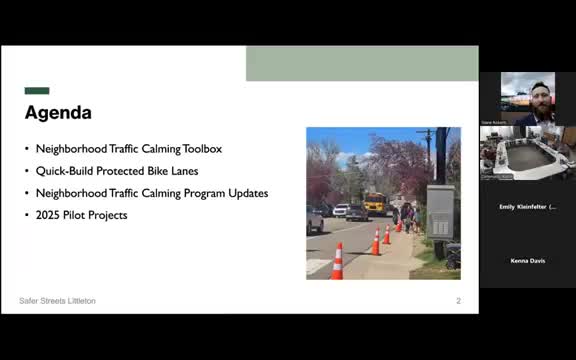
Summary
City staff described a data‑driven prioritization tool for neighborhood traffic calming, plans to revise seven pilot locations in spring, new durable quick‑build materials, and a public dashboard and website expected in early January for resident tracking and surveys.
City staff gave a detailed update to the Transportation & Mobility Board on the Safer Streets program, outlining how neighborhood traffic‑calming requests will be prioritized, how pilot projects will be evaluated, and how the public will be able to track requests and project status.
A staff presenter described a new scoring methodology that will weight speed and volume (20%), priority mode designation (20%), crash history (15%), activity generators such as nearby schools and parks (15%), and other factors (request counts and street type) to rank requests as low, medium, high or immediate priorities for pilots and potential permanent upgrades.
The presenter said the city plans to collect pre‑installation baseline data, install pilot treatments in spring, then gather post‑installation counts and surveys three months after installation to evaluate effectiveness. The staff presentation acknowledges the program’s resident survey has, to date, had mostly negative responses, and staff plan to update the survey wording and expand public education so residents understand reduced vehicle speed is an intended safety outcome.
On materials, staff noted a shift to more durable quick‑build components — including products from a manufacturer identified as Zikla (the ‘zebra’ and ‘zipper’ elements) — that have more mounting points and require less frequent replacement. Staff said seven revision locations are planned for spring (including bollard and striping adjustments) and that in some locations the team will add rubber speed cushions as a vertical treatment shown in peer review to have better long‑term speed reduction.
Communications changes include an automated request dashboard and email notifications tied to request status, a public dashboard showing locations and data, yard signs at pilot locations linking to surveys, and a plan to post regular Safer Streets summaries in the city’s Littleton report. Staff said the updated web page and dashboard are slated to go live in early January and that yard signs and in‑street signs will link residents to the evaluation survey.
Next steps: staff will continue data collection and prioritization, proceed with the spring package of pilots and targeted revisions, and publish before/after data on the public dashboard so residents can see measured effects.