
Lenoir City council authorizes May referendum to raise sales tax to fund Habitat repairs and parks upkeep
Get AI-powered insights, summaries, and transcripts
Subscribe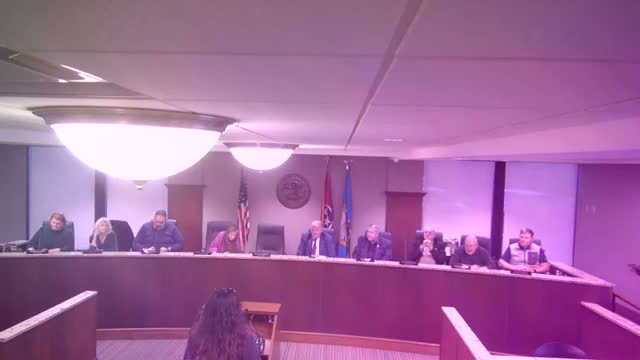
Summary
Lenoir City council voted to place a 0.75-percentage-point sales-tax referendum on the May ballot that would raise the city rate from 2.00% to 2.75%, directing $1,000,000 annually to a housing preservation fund administered locally by Habitat for Humanity and funding Parks & Recreation capital and maintenance needs.
Lenoir City council voted Dec. 29 to send a proposed local-option sales-and-use tax increase to the May ballot that, if approved by voters, would raise the city's sales tax from 2.00% to 2.75% and dedicate $1,000,000 a year to a housing preservation fund administered by Habitat for Humanity and to upgrades for the city's Parks & Recreation system.
The ordinance the council approved to put before voters specifies a recurring annual allocation for a Housing and Community Preservation Fund and identifies priorities including critical home repairs for seniors, veterans and individuals with disabilities and facility and maintenance improvements for parks. Council members recorded a roll-call vote on the ordinance: McNabb voted no; Walker, Kennedy, Shields, Brandon and Simsel voted yes.
The question followed a lengthy public-comment period and presentations by Habitat representatives and Parks & Recreation staff. A Lenoir City business owner who said she lives in the county told the council, "I'm for this increase in taxes," and explained many shoppers who generate local sales tax do not live inside city limits. Tony Gibbons, speaking for Habitat, said the affiliate would hold the dedicated funds in a single, segregated account limited to projects eligible under the program and described multiple accountability measures: audited Form 990 filings, annual reports to council, and availability of receipts and bank statements for city review.
Chris Callahan, introduced as Habitat's homeownership/home-repair director, walked council through intake and oversight for the repair program. He said eligibility would be based on HUD-provided area median income metrics, that contractors provide invoices for every job, and that Habitat uses a five-year forgivable restricted covenant to protect the program's investment in a property. "Every contractor that does any work for us has to turn in an invoice to me," Callahan said, describing how invoices and photos document work before reimbursement.
Parks & Recreation staff outlined current program growth and maintenance needs. The department said youth sports participation has climbed in recent years and listed near-term capital needs it would prioritize with first-year revenues, including replacing worn turf at Central Park (the lowest bid was described as just under $100,000), replacing two aging playgrounds at City Park and re-plastering the municipal pool within one to two years.
Speakers at the meeting raised questions about donor restrictions, whether funds could be diverted to Habitat International and legal authority to earmark more than one year's revenue. In response, Habitat presenters said public and grant funding already account for part of their revenue mix and that they would provide receipts, bank statements for the account and an annual audit; council members said city staff would negotiate a memorandum of understanding and audit procedures if voters approve the referendum. Council also discussed an attorney general opinion cited by a commenter in another case and city legal staff said they did not believe the cited opinion applied to the narrowly specified use in the proposed ordinance.
Council also passed a separate resolution requesting the county election commission place the referendum question on the May ballot; the roll-call on that resolution matched the ordinance vote. The council did not itself increase sales tax tonight; it authorized a public referendum that will let voters decide whether to adopt the change.
The next formal step is administrative: council staff and the city attorney were asked to coordinate with the county election commission and prepare the memorandum of understanding and audit language that would define city oversight of the program if voters approve the referendum.