Get Full Government Meeting Transcripts, Videos, & Alerts Forever!
Get email alerts on the Wetlands Ordinance topic
No spam. Unsubscribe anytime.
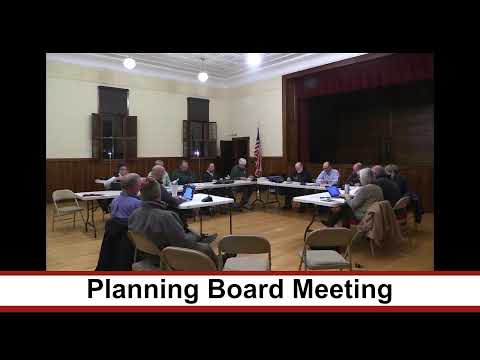
Planning Board sends new Wetlands Conservation District ordinance to 2026 ballot after lengthy debate on thresholds and buffers
Summary
The Planning Board voted to place a comprehensive Wetlands Conservation District (new Section 7) on the 2026 ballot after reviewing definitions, permitted and conditional uses, and conditional-use criteria; members debated thresholds (vernal pools over 500 sq ft, freshwater wetlands over 1,000 sq ft), buffer widths, and the balance between conservation and private-property rights.
The Town of Swansea Planning Board voted to place a new Wetlands Conservation District ordinance (replacement Section 7) on the 2026 town meeting ballot after an extended public hearing and detailed line‑by‑line review.
The ordinance replaces Section 7 with a comprehensive definition of wetlands and a set of permitted, conditional, and special provisions intended to protect water quality, flood storage, groundwater recharge and wildlife habitat. The board read the ordinance aloud, citing state authority in multiple RSA references as read in the hearing.
A key point of debate was the practical threshold the draft uses to limit the ordinance’s scope: vernal pools over 500 square feet and freshwater wetlands over 1,000 square feet (the transcript records the planning board and conservation commission agreed to these size cutoffs for administrative practicality). Conservation commissioners argued the thresholds focus protection on the most significant wetlands; others cautioned that smaller features can be ecologically important. “That was the compromise that we came up with,” one board member said, noting that roughly 500 square feet is “two parking spaces” and served as a practical line for regulation.
The ordinance establishes setbacks and buffers (for example, a 75-foot setback in rural/agricultural/residence districts and 50-foot setbacks in certain business/industrial districts, with narrower buffers allowed in more developed village areas) and allows the planning board, with conservation-commission input, to require wider buffers on a case-by-case basis. The rules also describe conditional‑use criteria (minimizing encroachment, considering soils/topography, requiring professional delineation when accuracy is questioned) and assign the applicant responsibility for costs of expert review under RSA references cited by the board.
Several planning board members emphasized that the provisions were the product of multiple rounds of work with the conservation commission and were intended as a balanced compromise between environmental protection and private-property rights. The chair closed the public hearing and the board moved, seconded, and voted to place the full ordinance on the 2026 ballot.
What happens next: The full ordinance text will appear on the 2026 town-meeting warrant for voter consideration. If adopted by voters, the town will implement the new Section 7 according to the ordinance’s procedures, including conditional-use and delineation requirements.
Authorities referenced in the hearing: multiple RSA citations as read by the chair and references to the US Army Corps of Engineers Wetland Delineation Manual (1987 and regional supplement) and New Hampshire guidance on vernal-pool identification.