
Hamilton superintendent urges one‑time cuts to eliminate multimillion‑dollar deficit, schedules Dec. 19 special meeting
Get AI-powered insights, summaries, and transcripts
Subscribe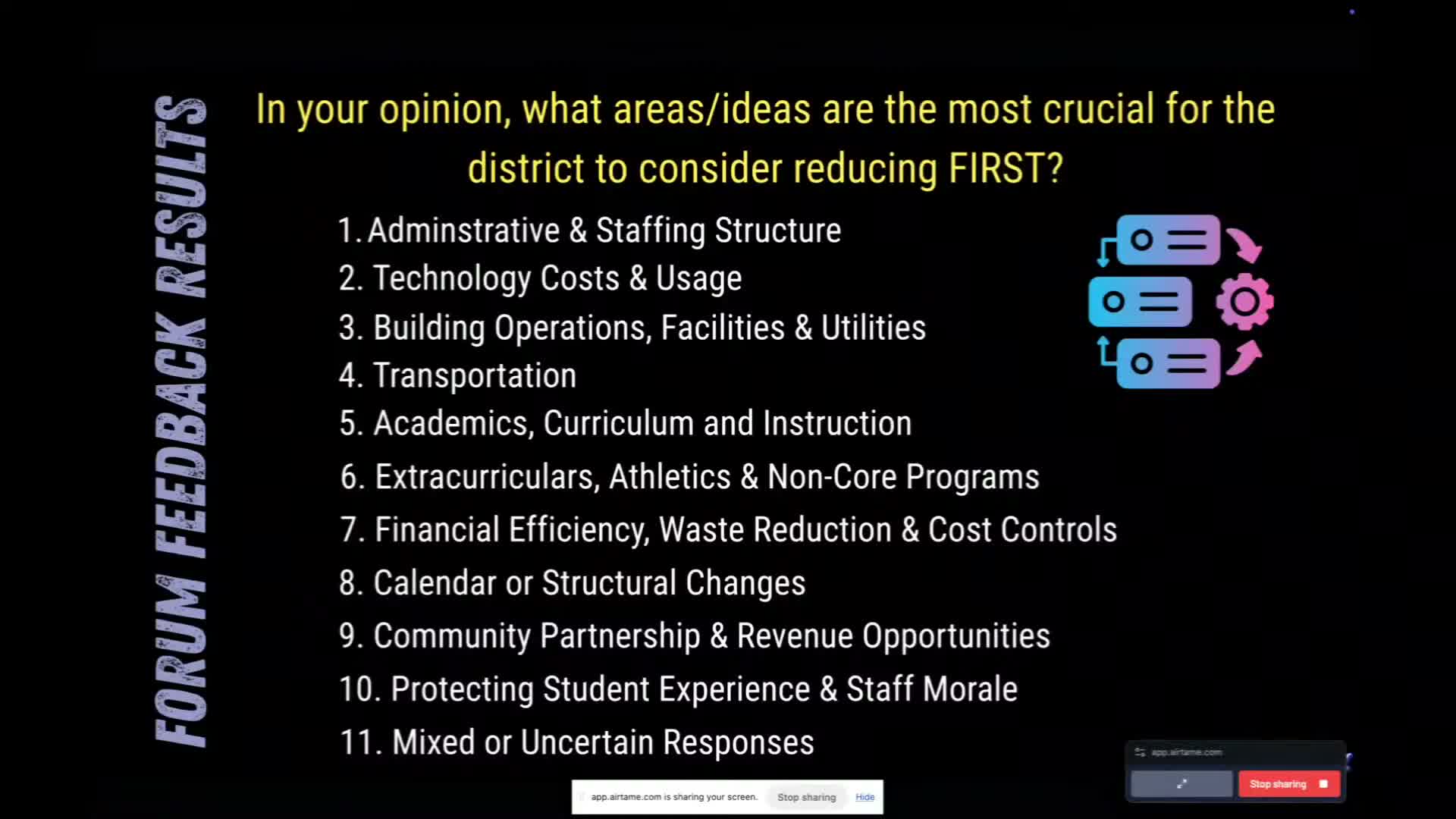
Summary
Superintendent Andrea Blevins told the school board that recent state funding changes and enrollment shifts produced a roughly $5 million shortfall this year that could compound in coming years. She recommended a one‑time round of reductions to drive the deficit to zero and asked the board to authorize a plan at a Dec. 19 special meeting.
Andrea Blevins, superintendent of Hamilton City Schools, said on Dec. 11 that the district faces a multi‑million dollar budget shortfall driven by state funding changes and enrollment choices and urged the board to approve a one‑time set of reductions to stabilize finances.
"My recommended strategy is to try to cut that deficit…as close to 0 as possible," Blevins said, arguing that smaller, repeated cuts would force the district to return to the same decisions year after year. She told board members and the public the most recent version of the Fair School Funding changes increased the district's projected shortfall from about $1 million to nearly $5 million this year and, without corrective action, that gap could grow in future forecasts.
Why it matters: Blevins and staff said adjustments to the state formula have halted planned input increases, and other policy shifts—cited in the meeting as EdChoice scholarship allocations—reduce state dollars available to traditional public schools. The superintendent argued a larger one‑time reduction would preserve a higher cash balance entering the next biennium and reduce the chance of repeated, disruptive cuts.
What was proposed and how the district reached it: Blevins summarized feedback from a public survey that highlighted 10 categories for potential savings, including technology, building operations, transportation, academics and curriculum reviews, extracurriculars, calendar/structural options, community partnerships, student supports and classroom resources. She stressed that many technology and third‑party program costs cited by respondents were not general fund expenses but funded through grants, permanent improvement dollars or reimbursements such as E‑Rate.
Blevins reiterated that the district currently serves a majority of local children—"we serve over 82% of the kids that reside in Hamilton"—and said leaders want to protect core services such as transportation and extracurriculars where possible while targeting savings elsewhere.
Numbers cited: Blevins said the state had previously planned to fund year‑five increases in the Fair School Funding roll‑out (about $1.7 billion statewide) and that year‑six allocations had been estimated at roughly $2.1 billion; district staff framed those statewide sums to explain the scale of policy changes affecting Hamilton.
Next steps: The board set a special meeting for 9 a.m. on Dec. 19 where Blevins and senior staff (including Jeremy, named in the meeting as a senior administrator working on the forecast) were asked to present a specific plan and be authorized to implement targeted reductions. Blevins and board members emphasized the goal of making reductions that are reversible when funding improves and warned that permanent, irreversible cuts should be avoided.
Public reaction and context: Several community members and board members thanked administrators for outreach forums, urged careful, equitable distribution of any cuts across the district and said voters will ultimately influence long‑term funding through levies or political pressure. A member of the public asked why the district had not pursued a levy earlier; Blevins replied that the district did not have final state budget figures until November and that recent county and state actions added uncertainty to levy timing and outcomes.
What remains unresolved: The board did not approve specific cuts at the Dec. 11 meeting. The Dec. 19 special meeting was scheduled to consider a formal resolution authorizing administrators to develop and execute a deficit‑reduction plan.