Get Full Government Meeting Transcripts, Videos, & Alerts Forever!
Get email alerts on the Energy Climate topic
No spam. Unsubscribe anytime.
Riverside adopts Energy Action Plan aimed at emissions cuts and household savings
Summary
The Board adopted a Village Energy Action Plan developed with Nutter Consulting and funded by an Illinois EPA block grant. The plan emphasizes efficiency, electrification, solar, EV charging and equity; staff and consultant will begin outreach, benchmarking and implementation support.
The Village of Riverside Board unanimously adopted an Energy Action Plan on Nov. 20, 2025 that the village says will help reduce greenhouse-gas emissions while lowering energy bills for residents and businesses.
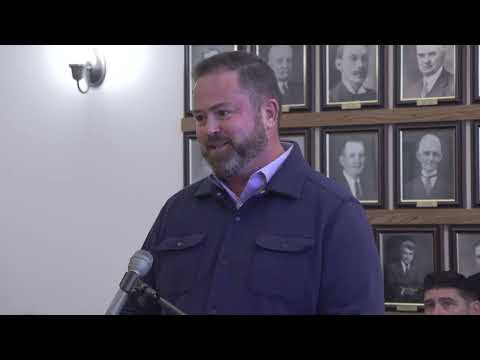
Melanie Nutter of Nutter Consulting presented the plan, which the village said is funded by the Illinois EPA’s Energy Efficiency and Conservation Block Grant Program and builds on Riverside’s Road to 2050 climate action goals. The plan focuses on four pillars: energy efficiency and electrification (weatherization, insulation, efficient appliances, and heat‑pump adoption); renewable energy expansion (rooftop solar, community solar and battery storage); sustainable transportation (EV charging, anti‑idling near schools, walking and biking improvements); and equity/resilience for renters, seniors and low‑income households.
Nutter cited community outreach that included 130 survey responses, 360 interactive votes and 10 stakeholder interviews. The plan projects a potential 35% greenhouse‑gas reduction by 2030 if fully implemented and estimated average participant savings of roughly $1,000 annually for households and as much as $10,000 for participating businesses. The plan also recommends municipal benchmarking, formation of an implementation team and early steps such as energy audits and contractor vetting. Trustees moved, seconded and adopted the plan on a roll call vote.
Nutter Consulting will remain on contract for technical assistance during initial implementation work.
The Board’s next steps include launching community education, forming an implementation team and beginning municipal building benchmarking and pilot programs.