
Consultants: Sequim needs 1,850 new homes by 2045; recommend zoning, fee and partnership changes
Get AI-powered insights, summaries, and transcripts
Subscribe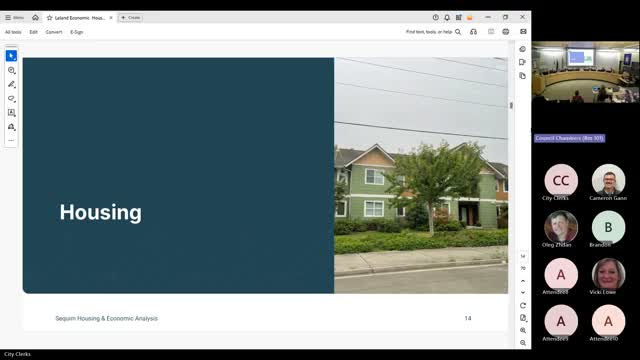
Summary
Leland Consulting told a joint Sequim City Council and Planning Commission session that Sequim must plan for 1,850 new housing units by 2045 to meet state targets, and recommended zoning changes, fee updates and incentives to spur multifamily and below‑market housing while monitoring short‑term rentals.
Leland Consulting presented data showing Sequim needs roughly 1,850 new housing units by 2045 to meet state targets and said the city faces specific supply barriers that policy changes could address. "The SQM needs 1,850 new housing units, by 2045 to meet the state housing targets," the consultants reported, citing state targets and local permitting trends.
The consultants said homeownership in Sequim is about 60 percent and that younger age groups have lower ownership rates, supporting stakeholder feedback that younger families face affordability barriers. "The homeownership rate in Sequim is about 60% of households are homeowners, 40% are renters," Jennifer of Leland Consulting said during the presentation, and the firm noted multifamily vacancy is extremely low (0.9 percent), signaling strong demand for rental units.
Leland identified several causes of slow multifamily growth: regulatory complexity in some zones (notably the HTLI and EOAs), high and rapidly increasing impact fees (including the park impact fee), design requirements that burden small projects, permitting delays and a limited local construction labor pool. The consultants recommended the city clarify the zoning code, consider a moderate‑density residential zone, update accessory dwelling unit rules to align with HB 137, and evaluate options such as a parks fee waiver for multifamily projects that meet open‑space or proximity thresholds.
On short‑term rentals, Leland said full‑home listings accounted for about 2.7 percent of single‑family homes within city limits at peak season and recommended ongoing monitoring rather than immediate regulation changes. "Because Sequim has vacant land, and other issues are more significant barriers, we didn't find that short term rentals are really having a big impact on housing prices in the Sequim market," the presentation stated.
City staff also told the council that the city already collects an affordable housing sales tax credit and that about $165,000 is in that account for future projects, though procedures to allocate those funds were not yet determined. Council members and commissioners asked for additional detail on unrelated‑household households, ADUs, and whether existing vacant homes could be preserved or repaired instead of building new units; consultants said those are viable policy avenues and that targeted preservation grants are commonly used elsewhere.
Next procedural steps were set: the Planning Commission will review the housing chapter at its next meeting and the full comprehensive plan and development regulation amendments are expected to be released in early 2026 with public hearings before the City Council in June 2026.