Get Full Government Meeting Transcripts, Videos, & Alerts Forever!
Get email alerts on the Board Governance topic
No spam. Unsubscribe anytime.
Weston board counsel trains members on FOIA, FERPA and limits on commenting about personnel
Summary
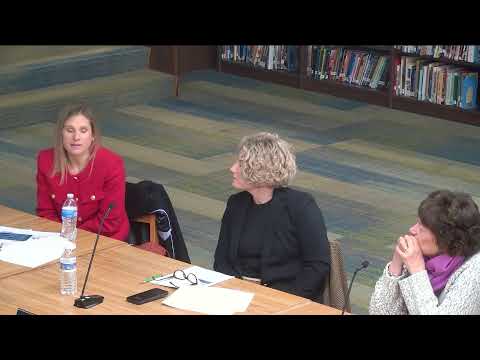
Attorney Jessica Richmond Smith led a December 15 training for the Weston Board of Education on roles, FOIA restrictions, FERPA confidentiality, the Teacher Tenure Act, new state library‑policy requirements and best practices for handling parent complaints and social‑media posts.
Attorney Jessica Richmond Smith told the Weston Board of Education at a Dec. 15 workshop that board members must be careful when responding to public complaints and that many personnel and student matters cannot be discussed in open session.
Smith, who led the training for the Weston Board of Education and the superintendent, said the board’s core duties include hiring the superintendent and overseeing budgets but that day‑to‑day management is the superintendent’s role. "You can't say anything," Smith said of public commentary on active personnel investigations, citing both due‑process and defamation risks.
Smith framed the legal guidance around state and federal rules: Connecticut education law (primarily Title 10 of the Connecticut General Statutes) and the Teacher Tenure Act (section 10‑151) govern termination processes for certified staff, while FERPA protects student records and imposes confidentiality limits. She said boards must generally defer to the superintendent and administration on investigations and may only engage formally if a matter advances to a hearing or executive session.
The attorney highlighted a new state law requiring boards to adopt three policies dealing with the collection, curation and challenge of library materials and displays. Smith said the district's forthcoming omnibus library policy is taken directly from the statute and that, if parents appeal a library challenge to the board, the board's review is limited to whether the required administrative process was followed rather than conducting a substantive review of the material.
Using a hypothetical in which a local paper published a teacher's arrest, Smith advised the board to explain processes in general terms — for example, that the district conducts a full investigation and takes student safety seriously — but to avoid pledges about personnel outcomes. "You cannot predetermine the outcome because that's a violation of [the teacher's] due process rights," she said.
On complaints of bullying or other student concerns that board members hear informally, Smith recommended routing matters through the chain of command (coach, athletic director, principal) and giving the superintendent a heads‑up as a fail‑safe. She distinguished specific allegations, which she urged members to pass along, from general criticisms that do not require immediate escalation.
Smith spent substantial time on the Freedom of Information Act (FOIA), warning that serial communications, reply‑alls, coordinated social‑media posts by multiple board members and text threads among a quorum can constitute meetings subject to FOIA. She described a past local FOIA violation in which private messages coordinating a public reading of a letter led to a finding and a public apology, and reminded members that records — including text messages and emails about board business — are subject to disclosure and must be preserved under legal hold.
On conflicts of interest, Smith said recusal is permitted when a member cannot be impartial but is not always required, noting statutory conflicts are typically narrow and often tied to financial interest. She also reviewed committee and caucus rules, explaining that committees and a quorum of board members must follow the same public‑meeting laws.
Board members asked practical questions about communications with constituents and staff time for information requests. Smith urged judicious use of administration resources and recommended that the full board vote when a large research or report is needed.
The workshop ended with procedural questions about tri‑board meetings and guest participation; Smith said each board must separately notice a meeting if a quorum of each is present. The session closed with a motion to adjourn that was seconded and approved by voice vote.