Get Full Government Meeting Transcripts, Videos, & Alerts Forever!
Get email alerts on the Procurement topic
No spam. Unsubscribe anytime.
Public raises audit and bidding oversight questions as board weighs procurement approaches for modulars, portables and construction
Summary
A public commenter urged a forensic audit before spending bond funds and asked for disclosure of bidding/contracting rules; staff later walked the board through procurement options (piggyback, CMAS, formal/informal bids, lease‑leaseback, best‑value) and said piggyback contracts and nonproprietary specs can save time and money.
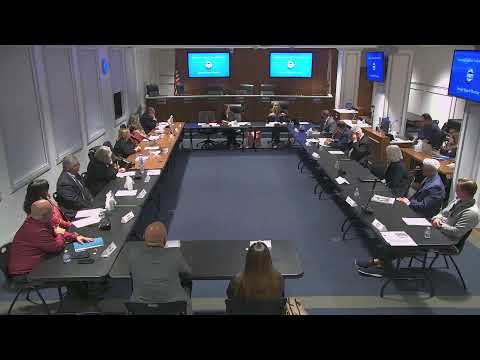
During public comment at the start of the Dec. 15 study session, a speaker who identified herself as Miss Cano asked the board to require a forensic audit before spending recently approved funds and raised a series of questions about bidding rules, conflict-of-interest safeguards and whether the district follows the uniform public construction cost accounting act.
Staff heard those concerns and then presented procurement alternatives for purchasing portables and constructing campus projects. Procurement staff explained the district's public-contract tiers (quotes under $75,000, informal bids $75,000–$220,000, formal bidding above $220,000 under the California Uniform Public Construction Cost Accounting Act) and noted that piggybacking on other districts’ contracts or using CMAS can reduce cost and procurement time if the underlying contract remains current.
Staff also described alternative delivery methods used in school construction — design–bid–build (with prequalification for projects over $1 million), lease–leaseback (a financing/delivery option requiring a board resolution), design–build, construction manager at risk and multi-prime — and discussed the new option to use best-value evaluations for projects over $220,000. Procurement staff said best-value will require a board-level policy change before widespread use.
On the public‑audit request, the presenter asked where the district's bidding and contracting guide is posted and whether the district follows competitive bidding requirements and conflict‑of‑interest safeguards. Board members acknowledged the request and asked staff to include procurement clarity and non‑proprietary specifications in future reports and to make bond‑oversight materials available as part of the upcoming project recommendations.
No formal audit motion was taken at the meeting. Staff said they will produce clearer procurement language, disclose applicable procurement guides and include specification language intended to avoid proprietary lock-in where appropriate.