Get Full Government Meeting Transcripts, Videos, & Alerts Forever!
Get email alerts on the Education Pathways topic
No spam. Unsubscribe anytime.
South Colonie outlines Portrait of a Graduate plan and expands career pathways
Summary
At its Dec. 9 meeting, South Colonie Central School District presenters laid out plans to implement New York State's recently adopted "Portrait of a Graduate," expand career/CTE pathways, and develop a student readiness dashboard to track capstone, work-based and credentialing opportunities.
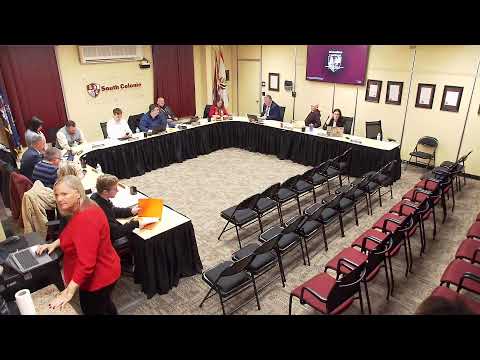
South Colonie Central School District leaders presented an initial implementation plan for New York State's recently adopted "Portrait of a Graduate" at the board's Dec. 9 meeting, outlining new course pathways, certificate opportunities and a proposed readiness dashboard to track student outcomes.
Tom Skachadorian, the high school academic assistant superintendent, said the Portrait of a Graduate — adopted by the New York State Regents — will shift how the district documents graduation readiness. Skachadorian said the state aims for full implementation by 2029 and the district wants to "be ahead of the game," aligning local pathways, capstone projects and community-service requirements with the state's framework.
Bill Barrell, high school principal, described specific pathway expansions under consideration: business administration (with classes such as business ethics and international business), AP Seminar/AP Research as an AP Capstone track, leadership studies, technology classes that include "principles of AI," and health-care offerings including introductions to nursing and patient-care certificates. The district also highlighted existing certificate programs such as OSHA-10, EMT-related programming and Cisco coursework, and said it currently offers roughly 52to 53 college-accredited classes.
Administrators emphasized work-based learning (CEIP) expansion and local credentialing that could help some students leave high school "job ready." Skachadorian said the district aims for two-thirds of seniors to receive a CEIP experience and is exploring micro-credential approaches (short, concentrated course sequences) for areas such as patient care and pre-CDL exposure.
Board members asked how coursework will transfer to SUNY/HVCC and other institutions; presenters said transferability will depend on local course design and that some programs may begin locally before pursuing formal agreements with higher-education partners. On nursing and other health courses, administrators said program content can be designed to introduce students to the field even if full clinical placements require external partnerships.
Equity and curricular responsiveness drew repeated questions. One board member urged administrators to describe how a culturally responsive and sustaining education (CRSE) framework would be integrated so that the Portrait of a Graduate places marginalized students at the center of planning. Administrators acknowledged that work on CRSE is ongoing and said deeper engagement with departments and community stakeholders will follow.
Dr. Perry, the district superintendent, said the administration has been working with EdVista on a prototype readiness dashboard that would allow students and counselors to track pathway milestones, credits, capstone progress and nonacademic readiness indicators (for example, SAT completion or a license). The district said it has begun stakeholder meetings across grade levels and will continue piloting and refining course offerings in the coming year.
Next steps include further community and departmental input, curricular alignment to support transferability and follow-up updates to the board at future meetings.