
Henderson County school food program running a deficit; board warned of likely price increase
Get AI-powered insights, summaries, and transcripts
Subscribe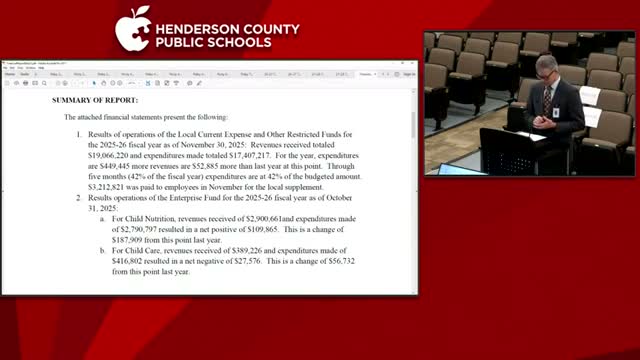
Summary
Finance staff reported rising food and labor costs have put the child‑nutrition enterprise fund under pressure; district forecasts a $625,000 use of fund balance, leaving roughly $300,000 in reserve and prompting plans to explore delivery models, grants and possible meal‑price increases.
Finance staff told the board on Dec. 8 that the district’s child‑nutrition program is operating at a deficit this school year and will likely need to draw roughly $625,000 from fund balance to cover costs.
The director reported child‑nutrition revenues of about $2.0 million through October against expenditures of roughly $2.09 million and said current per‑plate cost averages were about $5.15. The district currently charges $3.75 for high‑school lunches and $3.50 elsewhere; federal reimbursement for a free lunch is $4.62, while paid‑meal reimbursement adds about $0.46, staff said. "If you don't get it to $4.62," a staff member warned, "we've gotta raise money—you're losing money even if it's a full [reimbursed] lunch."
Board members discussed near‑term options: advocating for higher federal or state reimbursement (a federal decision, routed through the state), exploring nonprofit partnerships (Eat Real/Ereal) and visiting districts that have restructured menus and operations. Administration said it will deliver a January report with concrete scenarios, including per‑meal price options and programmatic changes.
What the board heard: with roughly $1,000,000 cash in the child‑nutrition bank account now, using an additional $625,000 would leave about $300,000 in reserve—enough for roughly 12–18 months at current burn rates, finance staff said. The director recommended examining delivery models, local grants and modest price increases before cutting services.
What’s next: staff will return in January with a first‑quarter financial update and recommended options for stabilizing the program without unduly burdening families.