Get Full Government Meeting Transcripts, Videos, & Alerts Forever!
Get email alerts on the Water Infrastructure topic
No spam. Unsubscribe anytime.
Hickory Council approves $10.6 million smart water‑meter system; city share about $8 million
Summary
The Hickory City Council unanimously accepted a $10.6 million contract to install an advanced metering infrastructure (AMI) system to replace roughly 32,000 water meters, with Catawba and Alexander counties covering $2.7 million and the city’s net cost described as about $8 million. Installation is expected to take two to three years.
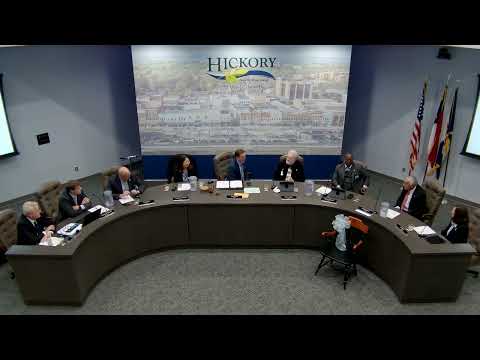
The Hickory City Council voted unanimously Dec. 2 to accept a bid and award a contract for an advanced metering infrastructure (AMI) system to replace approximately 32,000 water meters and add sensors to improve operations and customer access to usage data. City Manager Warren Wood told the council the total project cost is $10,600,000 with a 10% contingency and that Catawba and Alexander counties will pay about $2,700,000, “which brings our total to about 8,000,000, city of Hickory dollars.”
Wood said the city has planned the upgrade for about a decade and expects installation to take “2 to 3 years,” starting early next year and proceeding by sector. He described benefits including more accurate meter reads as meters age, near‑real‑time consumption data for customers, earlier leak detection to prevent property damage, faster identification of line breaks for maintenance staff, and the ability to deploy sensors that measure chlorine, pH, turbidity and other water‑quality indicators.
On cybersecurity and software, Wood said the contract includes software upgrades and $56,000 allocated to related software work; the system will use cloud services and “there’s protections in the place,” he said when asked whether the system could be hacked. He also told the council customers will be able to use a web portal or mobile device to view usage and that tutorials and in‑person help at city hall or the public library will be available for residents without home devices.
Council members asked about implementation sequencing, possible increases in customer bills if aging meters had undercounted usage, and what would happen to removed meters; Wood said removed meters would realize scrap‑metal value. After discussion, Mayor Hank Gess moved to accept the bid and award the agreement as described by Wood; the motion was seconded and the council approved the contract unanimously.
The council did not record a roll‑call tally in the transcript; the action was announced as unanimous. City staff said funding for the purchase had been previously reserved and that the AMI contract includes a contingency and software work to support long‑term operations. The city manager framed the project as both an operational improvement for staff safety (reducing manual meter reading in the street) and a tool to help customers monitor and reduce water use, which could preserve plant capacity.