Get Full Government Meeting Transcripts, Videos, & Alerts Forever!
Get email alerts on the Pavement Preservation And Safety topic
No spam. Unsubscribe anytime.
Prescott Valley public works outlines pavement-preservation strategy, Safe Streets projects and Lasso Loop plan
Summary
Public Works Director Heather Reuter described the town's data-driven pavement preservation program (using pavement condition indexes), funding sources (HURF, stormwater rates, general fund), the Safe Streets for All grant's recommendations to reduce serious-injury crashes and the Lasso Loop 24–26 mile multi-use path plan.
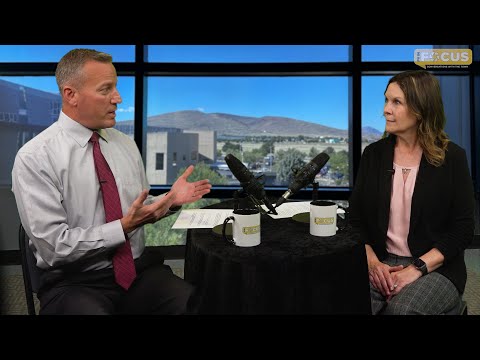
Prescott Valley's public works department is using data and a multi-year plan to prioritize road repairs and safety improvements, Director Heather Reuter said on the PV in Focus podcast.
The town hires a contractor to drive and score every roadway to produce a pavement condition index (PCI). "How we put our 5 year pavement preservation plan together is we look at where our roads are failing based on the grade that was gathered, and we focus on those first," Reuter said. The scores are updated annually and roads are rescored every two to three years; preservation treatments such as overlays can extend pavement life by roughly five years.
Reuter and the host pointed to Glassford South as an example where limited earlier preservation required a full, costlier reconstruction.
Funding for public works comes from three primary sources, Reuter said: the Highway User Revenue Fund (HURF, the state's gas-tax distribution), stormwater rates and the town's general fund. She emphasized restrictions on funds: some revenue sources are legally or administratively limited to specific categories and cannot be used for unrelated expenses.
The town also pursued a Safe Streets for All grant to analyze five years of crash data (pedestrian, bicycle and vehicular) and identify locations where small, targeted changes—multi-use path connections, intersection realignments, visibility improvements—could reduce serious-injury crashes. Reuter said the grant's analysis supports the town's Vision Zero goal of eliminating serious-injury crashes.
On active and aspirational multimodal projects, Reuter described the Lasso Loop: a 24–26 mile multi-use path planning document that would encircle Prescott Valley with connectors into retail, residential areas, schools and churches. She said fully implementing the Lasso Loop would encourage walking and biking and move people off roadways.
Reuter asked residents to help by reporting problems through the town website (submit a work order and drop a pin) or by calling public works so staff can route issues to the correct division.
The town is pursuing supplemental grants to accelerate implementation of several of the Safe Streets projects and hopes to move those forward if funded.