Get Full Government Meeting Transcripts, Videos, & Alerts Forever!
Get email alerts on the Property Tax topic
No spam. Unsubscribe anytime.
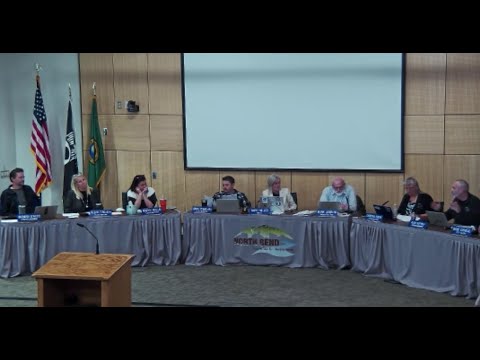
North Bend adopts 1% property‑tax increase, council earmarks it for police services
Summary
Council approved the 2026 property tax ordinance, adopting a 1% increase (about $25,000 citywide), and an amendment to direct that increase toward police/public safety costs; council recorded the amendment vote as 5‑2 and then adopted the ordinance.
The North Bend City Council voted on Nov. 18 to adopt its 2026 property tax levy ordinance and take the statutory 1% increase allowed under state law, with councilmembers amending the ordinance to earmark the increase for police/public‑safety costs.
Finance Director Martin Shaw told the council the recommended regular levy for 2026 is $2,600,000 with a separate excess levy of $150,000 for fire station bonds. Shaw explained the state’s budget‑based property‑tax method and said the 1% increase equals about $25,000 for the city. “On the million‑dollar home it's about $10 a year,” he said, using an example to illustrate household impact.
Councilmember Christina Rustic moved to earmark the 1% increase specifically for police/public‑safety costs; the amendment was recorded as passing 5‑2. The council then voted to adopt the ordinance as amended. City staff noted that if the council declines the 1% in future years the capacity may be banked only with explicit ordinance language directing the county assessor to do so.
What it means for residents: the city’s share of a typical property tax bill is about 10%; the 1% levy increase for 2026 would raise the city’s portion by roughly one‑penny per $1,000 of assessed value. Shaw emphasized that not taking the 1% represents a permanent loss in taxing capacity because the levy base compounds off the prior year.
Next steps: the city will implement the levy and the extra revenue (approximately $25,000) will be tracked as directed; council can revisit allocations in future budgets.