Get Full Government Meeting Transcripts, Videos, & Alerts Forever!
Get email alerts on the Arpa Funding topic
No spam. Unsubscribe anytime.
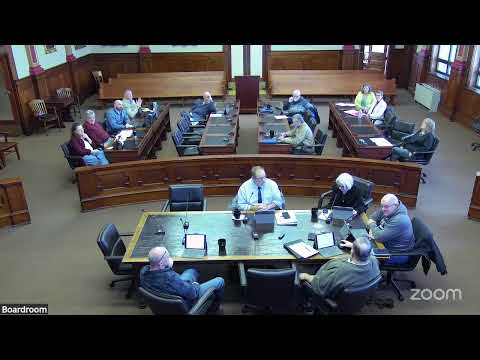
Lee County board reviews final ARPA report showing $6.6 million allocated largely to capital projects
Summary
County staff presented a final ARPA (SLFRF) accounting showing $6.6 million received and a distribution that placed about 62% into capital projects and the remainder into general requests, small-business grants, community services and economic development; board members praised record-keeping and asked about future capital funding.
Lee County staff presented a final report on American Rescue Plan Act (SLFRF/ARPA) spending, saying the county received $6,600,000 and has obligated or expended the funds consistent with Treasury guidance and the board's committee priorities.
Sarah and Patty — the staff presenters — told the board the county chose Treasury's 'standard allowance' in April 2022 to gain flexibility and then allocated funds across several categories. They said capital projects accounted for roughly 62% of total ARPA spending while general requests made up about 20%, small-business support 10%, business development/job training 6%, and community-service grants 2%.
The presentation listed specific awards and projects: $197,000 for new election equipment for the county clerk; roughly $248,000 for county board technology (tablets); remediation of unsafe abandoned properties ($45,000); portable and mobile radios for corrections and court security (~$24,000); nearly $100,000 distributed to local fire departments (about $10,000 each); $236,000 for fairgrounds building and barn upgrades; $250,000 toward a Brooklyn Road concrete culvert; courthouse and courthouse-adjacent capital work including an elevator, asbestos abatement and flooring; and a $11,000 Polycom/virtual-appearance system to allow inmates to appear in court by video.
Small-business assistance totaled about $489,000 spread across 49 recipients (program allowed up to $10,404 per eligible business). Staff provided a long list of businesses that received grants and noted program eligibility required businesses be operating on March 16, 2020, be in a highly impacted industry, and have 25 or fewer employees. Community-service grants totaled roughly $129,000 across 13 agencies (about $10,000 each) including Meals on Wheels and United Way of Lee County. Sauk Valley Community College received $100,000 for an automated greenhouse project; the county pledged $35,000 annually to LCIDA to support an economic developer for 2023–24.
On capital spending, presenters cited a multi-stage HVAC project for a county building and associated engineering ($2.8 million project with earlier ARPA approvals), a new elevator, boiler purchase, and other courthouse improvements. Staff said administrative costs totaled about $219,000; presenters noted federal statute would have allowed up to 10% (which would have exceeded $600,000) but the county kept administrative expenses lower, directing more funds to projects.
Board members praised the staff for documentation and stewardship and asked practical follow-ups: how the county will plan to fund future replacements for ARPA-funded capital, how grant recipients are tracked if businesses later close, and whether the county had clawback authority. Staff said ARPA grants did not contain routine clawback provisions and that the county's recourse is limited once funds are spent; they described record-keeping measures put in place to support audits and future reporting. Finance Director Reid Acree and others discussed improving rolling five-year capital plans and noted the county's capital fund balance has grown (from about $600,000 in 2012 to over $8,000,000 currently), but that large capital projects can quickly deplete reserves.
The board accepted the final report and staff said a closeout/annual report cycle will continue per Treasury timelines and county reporting requirements.
Ending: Staff said required federal and county reporting will continue into 2026 and 2027 to cover remaining administrative closeout requirements, and that the ARPA committee will provide the final closeout documentation to the board when available.