
Treasurer warns state property-tax bills could shrink district revenue; levies and county override flagged
Get AI-powered insights, summaries, and transcripts
Subscribe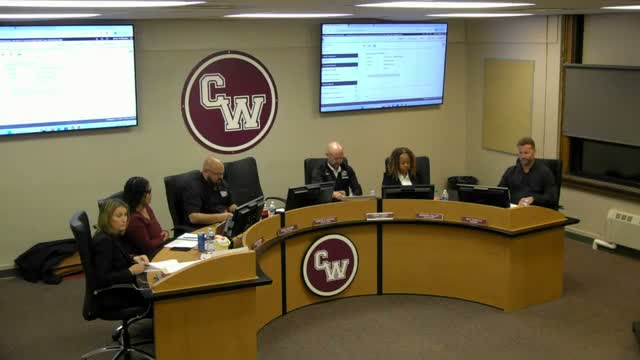
Summary
The district treasurer briefed the board on multiple recently passed Ohio bills (House Bills 129, 186, 335 and 309) that could change how levies are renewed, affect inside‑mill calculations and give county budget commissions more discretion — potentially reducing local school revenue and prompting legal challenges.
During the executive report, the treasurer briefed the Canal Winchester Local Schools Board on four state property‑tax bills recently approved by the legislature and pending the governor’s action. He framed the bills as a mix of short‑term fixes and longer‑term structural changes that could significantly alter how districts raise property‑tax revenue.
Key points cited by the treasurer: House Bill 129 would allow a district to renew an existing substitute emergency levy once more — a provision the treasurer said the district supports to preserve a 2029 renewal option. House Bill 186 was described as more restrictive, allowing only a one‑time renewal in the treasurer’s reading and changing millage calculations. House Bill 335 was characterized as potentially the most consequential because it alters the historic "inside millage" rules and, over time, could reduce or eliminate inside mills as property values grow. The treasurer said that change could reduce growth in local revenue and incentivize county valuation changes.
He also described House Bill 309 as granting county budget commissions more authority to override or reduce levies that voters approve, noting the commission could disallow a levy if it judged the district's cash reserve too large — an outcome that, if exercised, could negate locally approved levies.
The treasurer said the bills’ combined effects are complex, causing confusion in state simulations and unrest among districts; he reported some districts were considering legal action over the approach to combining fixed‑sum levies with millage calculations. He warned the board the district’s capital project is "a little bit" over budget and that the district may need to make choices in an upcoming work session to keep long‑term finances stable.
Board members asked for clarification about how bills interact and how quickly decisions will be required. The treasurer emphasized the district is preparing scenarios and urged patience until governor action and clearer state simulations are available. He noted residents may see a modest tax credit ($200–$350) on a later settlement bill but that longer‑term revenue erosion is a concern and could push districts toward alternative revenue strategies, including income tax proposals.
No formal board action was taken during this briefing; staff said they would continue scenario planning and return with proposals.