Get Full Government Meeting Transcripts, Videos, & Alerts Forever!
Get email alerts on the Water Rates topic
No spam. Unsubscribe anytime.
Downey council initiates Prop 218 process for water rate adjustments to fund PFAS plant
Summary
After a consultant presentation showing the city has not raised water rates in 10 years and faces large capital needs including an estimated $127 million PFAS treatment plant, the Downey City Council unanimously directed staff to initiate Proposition 218 proceedings and community outreach on proposed water‑rate adjustments.
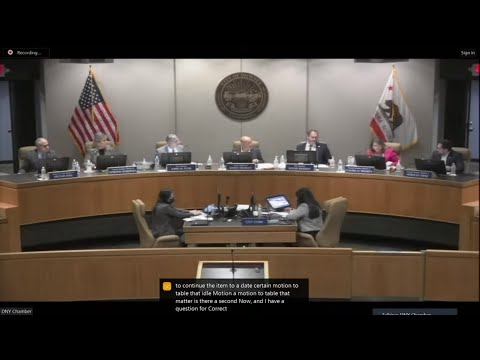
The Downey City Council voted unanimously to adopt Resolution No. 25‑8326 and initiate Proposition 218 proceedings to consider adjustments to the city’s water rates. The action follows a presentation by consultant Steve Gagnon of Raftelis and a staff briefing from Public Works Director Matt Baumgartner.
Gagnon told the council the city has not raised water rates for about 10 years and faces rising operating and capital costs, including an estimated $127,000,000 PFAS treatment plant. He said the proposed rate structure and schedule in the study would allow the city to meet reserves, debt service coverage, and State Revolving Fund loan requirements needed to finance the PFAS project and other capital improvements.
Gagnon presented bill‑impact examples: a typical single‑family home (assumed 1,200 cubic feet monthly usage) would see a monthly bill move from about $30 to roughly $45 in the study’s first year, an increase of just under $15. He also showed proposed increases to fixed charges (roughly $23 to $29 in early years) and described a four‑tier volumetric structure for single‑family customers intended to promote conservation.
Council members asked clarifying questions about comparisons to neighboring utilities, reserve targets, and the timing of the public hearing process. Following discussion, Council Member Trujillo moved to receive the comprehensive study and adopt the resolution to initiate Proposition 218 proceedings; the motion passed unanimously.
What’s next: staff will proceed with the Proposition 218 noticing and community outreach and return to the council at a public hearing (staff referenced a target hearing date in January), after which the council may decide whether to implement the proposed rates.