Get Full Government Meeting Transcripts, Videos, & Alerts Forever!
Get email alerts on the No Knock List topic
No spam. Unsubscribe anytime.
Lincoln police propose 'no-knock' registrar for solicitors; council asks for legal, procedural details
Summary
Police chief proposed a city-managed 'no-knock' registration residents can join to keep solicitors from knocking; council asked staff and the city attorney to draft ordinance language addressing distribution, signatures, online access and FOIA concerns before voting.
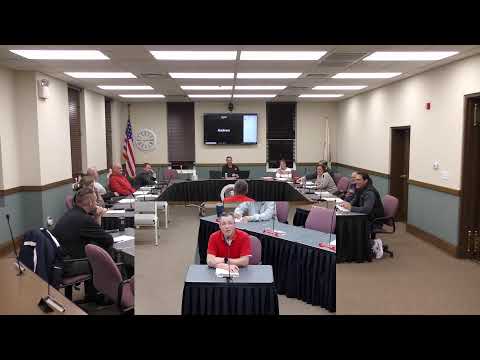
City of Lincoln police Chief Meister on Dec. 9 proposed a city-managed “no‑knock” registration so residents who do not want solicitors to visit can sign up and have their addresses withheld from door‑to‑door solicitation.
“I thought it was a great idea,” Chief Meister said, describing a local model in “Mohammed, Illinois” and recommending a registration the police department would maintain. He said the city currently sells a neon sticker for $1 that warns solicitors, but a formal list would give enforcement teeth when solicitors hold a city license.
Council members raised operational and legal questions. Council member Bateman asked whether solicitors would be required to sign an acknowledgment that they received the list as part of their permit; Attorney (speaker 11) said that could be added to the application or attached to the permit. Chief Meister said the registration could be run like the department’s voluntary camera‑registration program and maintained as an address-only file for distribution to solicitors.
Members discussed online posting, frequent updates and practical defenses when ownership changes. “If we maintain that list, say you lived at 123 Anywhere Street, you moved out and sold the house to me … that would be a defense,” Chief Meister said, noting the department could remove addresses when staff are notified.
Council member Treblett warned that keeping names and addresses together could create records‑release issues; the city attorney said staff would examine Freedom of Information Act implications and advise on redaction/format options. Council members also noted First Amendment limits on an absolute ban on solicitation and asked staff to propose language that balances constitutionally protected solicitation and the registration’s intent.
Next steps: Chief Meister and the city attorney will draft ordinance language and an acknowledgment/receipt form; staff will research the model used by the referenced municipality and return to the council with recommendations before the item is placed on a future agenda.