Get Full Government Meeting Transcripts, Videos, & Alerts Forever!
Get email alerts on the Finance Transfers topic
No spam. Unsubscribe anytime.
Mount Vernon council adopts year‑end transfers, supplemental appropriations and then‑and‑now payments
Summary
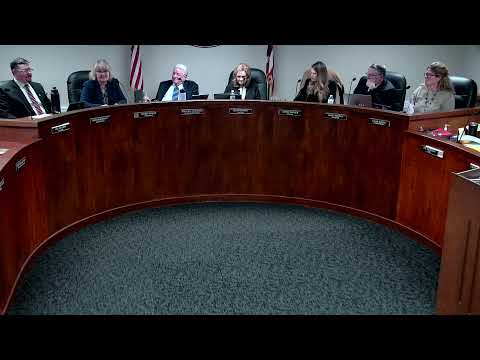
Mount Vernon City Council voted Dec. 22 to approve a series of year‑end financial moves — an amended transfer resolution, supplemental appropriations tied to grants and reimbursements, and then‑and‑now payments — to close 2025 with positive account balances.
Mount Vernon City Council on Dec. 22 approved several year‑end finance measures intended to ensure the city’s accounts close the year in the black.
The council amended and adopted Resolution 2025‑138, which directs the city auditor to transfer funds between accounts to correct lines that would otherwise end the year negative. Auditor staff explained that transfers were needed across “700 and some odd lines,” and cited several drivers including longevity and payroll timing and an approximately $70,000 invoice related to an OpenGov contract signed late in the year. “We have a number of different things here…so that we end all the accounts on a positive,” the auditor said during discussion.
The council also adopted Resolution 2025‑139 authorizing supplemental appropriations tied to multiple grants and reimbursements connected to the Route 13 realignment project. The auditor and engineering staff said funds will be reimbursed by state or federal sources, including ODOT and a TRAC grant, once purchases and closings occur. Finally, council adopted Resolution 2025‑140 to permit payment of certain bills under Ohio’s then‑and‑now certification process (section 5705.41(d)), including payments to current vendors while vendor transitions proceed.
Why this matters: the transfers and appropriations are bookkeeping and authorization steps that allow the city to meet contractual obligations and complete grant‑funded projects without leaving accounts negative after year‑end closing.
Council details and next steps: the auditor said some items were re‑allocated rather than increasing overall appropriations; the OpenGov invoice and municipal court software transition were cited as timing issues that required action now. Council members voted to suspend the three‑reading rule where required, approved amendments where proposed, and adopted the measures.
The measures become effective immediately as emergency resolutions or by council vote; the auditor will proceed with the transfers and report as required by statute and city practice.