Get Full Government Meeting Transcripts, Videos, & Alerts Forever!
Get email alerts on the Transportation topic
No spam. Unsubscribe anytime.
Tempe staff propose 5 mph reductions on seven corridors to improve safety and consistency
Summary
Senior civil engineer Michelle Beckley recommended 5-mph speed reductions on seven segments (Broadway, Priest, Guadalupe, 5th St/Veterans Way, Miller, McKellips, Roosevelt) to improve corridor consistency and support new pedestrian/bike projects; staff proposed public outreach and formal hearings before adoption.
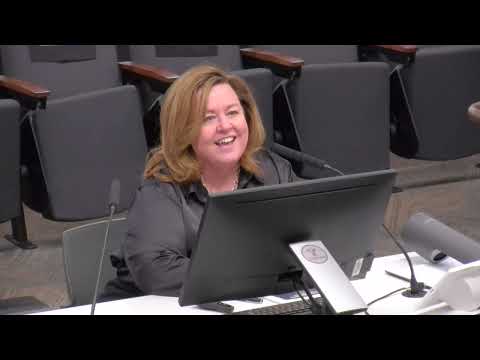
Michelle Beckley, senior civil engineer in Tempe's traffic group, presented a package of proposed 5-mph speed-limit reductions across seven roadway segments and asked the council for support to move the changes to public outreach and hearings.
Beckley said the changes aim to reduce speed variance, improve safety and provide consistency along corridors where adjacent segments already post the lower limit. Proposed adjustments include bringing portions of Broadway and Priest Drive from 45 to 40 mph to match intervening segments; lowering Guadalupe and Roosevelt segments by 5 mph; and smaller reductions on 5th Street/Veterans Way, Miller Road and McKellips Road to improve transitions and reflect planned roadway projects and new multimodal crossings.
Beckley cited multimodal improvements coming to several corridors, including new pedestrian bridges and multi-use-path crossings, and said some corridors are undergoing construction that will change their look and function. She recommended two public hearings and both virtual and in-person outreach before the council considers formal adoption.
Council members asked about potential diversion of commuter traffic to adjacent arterials and cross-jurisdictional consistency; staff said they would review peak-period impacts and coordination with neighboring cities as part of outreach.