
Volunteer at Community Common Action Day warns invasive mustard fuels fires, praises native plants' recovery
Get AI-powered insights, summaries, and transcripts
Subscribe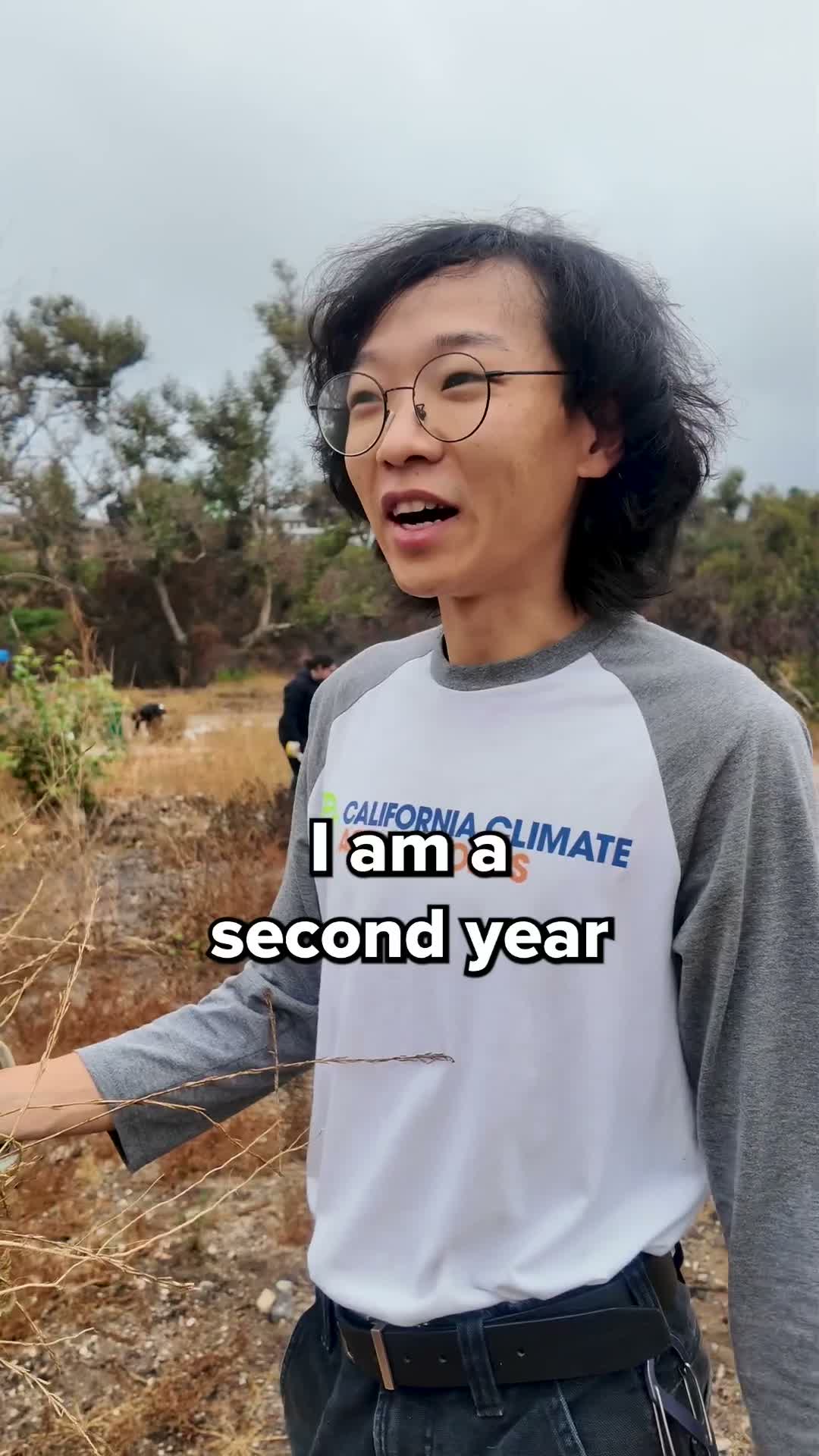
Summary
A second-year California Common Action Corps fellow said volunteers are removing invasive mustard at a Community Common Action Day because the plant dries and grows tall, increasing fire risk. The fellow also highlighted native plants' role in slowing fire spread and restoring habitat for birds, and noted the site's recovery since a recent fire.
A second-year California Common Action Corps fellow urged volunteers at a Community Common Action Day to remove invasive mustard from a recently burned site, saying the plant’s height and dryness make it likely to accelerate wildfire spread. "We're taking this out because if you look at it right now, it is so dry and it gets really tall," the fellow said. "So when a fire comes through here, it just lights up. It goes really fast."
The fellow contrasted the mustard with native plants still holding moisture on the site, saying native vegetation can help slow the spread of fire while providing "tremendous ecological benefits." They noted the practical value of native plants for wildlife: "I think for a baby bird to learn to fly, they need to eat between 2 to 8,000 caterpillar," a figure the speaker presented as an estimate to emphasize the scale of insect prey needed for fledging birds.
The speaker described a personal connection to the location, saying this was their first visit back since a fire and that "the native plants have all bounced back and all the birds are starting to return." They said the restoration work also served as professional development, allowing fellows to learn about native species in the field.
The remarks were delivered as part of volunteer restoration activity rather than a formal board or agency action; no motions or votes were recorded in the transcript. The fellow’s statements call attention to local volunteer efforts to reduce fuel loads and restore habitat after fire, and to the ecological role native plants play in post-fire recovery.