Springfield officials defend warming-shelter response as residents press for longer-term plan
Summary
Residents pressed the Springfield City Commission about shelter closures and public-safety concerns; city leaders said a brief shutdown was tied to security issues, the city provided initial pass-through funding (about $30,000) and a security contractor has been engaged while staff pursue longer-term, multi-provider solutions.
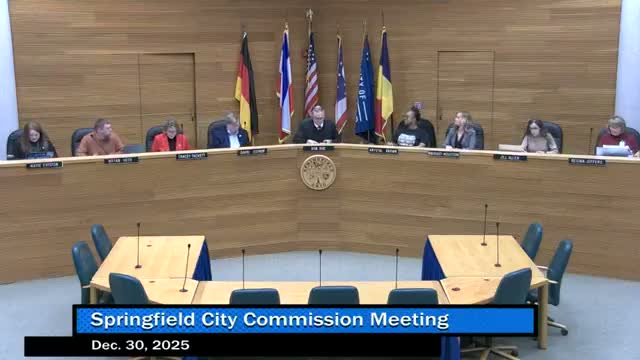
Residents at Monday’s Springfield City Commission meeting urged faster action on homelessness and criticized how volunteer-run warming operations were handled; city leaders said a temporary security pause prompted new measures and outlined funding now in use.
James Blanken told the commission he objected to closing a warming center because of safety concerns and said a local volunteer had repeatedly offered to help. “Why did you not go with Baron?” he asked, and requested a public interview with commissioners to press the issue. John Holland, another speaker, recounted a childhood report to police after an attempted abduction that he said was not acted on: “I made a police report and nothing was done,” he said, connecting that experience to broader public-safety worries.
Mayor Rue and Brian, the city manager, responded that the warming shelter had been closed briefly because of security concerns and that the city had helped Nehemiah Foundation and other partners secure support. Brian said the city provided an initial pass-through grant of about $30,000 to help restart operations and worked to procure a private security contractor who began coverage “last night” to address the specific safety issues. He said volunteers and partner organizations run much of the day-to-day service but that the city has a responsibility to ensure procurement and federal fund rules are followed.
City staff told commissioners the shelter has averaged about 40 to 50 individuals per night and typically operates during cold-weather hours (roughly 6 p.m. to 8 a.m.). Brian said the city has committed funding across multiple providers — naming Sheltered Inc., Project Woman and the warming shelter among recipients — and that combined commitments in recent periods have exceeded $500,000 to support homelessness services. He emphasized that federal entitlement and CDBG rules require oversight and that diverting funds to one program can reduce monies available for other neighborhood and community needs.
Commissioners pressed staff on whether security had been budgeted (it had not) and on trade-offs that shifting dollars might create for other programs. Commissioner questions focused on where funds would come from and what other programs might see reduced support if new, ongoing security or operations costs were added to shelter budgets.
The public commenters and commissioners also called for a multi-faceted approach: more providers, clearer volunteer training and orientation, and targeted outreach to youth identified in public-health reports as a disproportionately affected group. Nehemiah Foundation was named as a current operator and was listed as accepting donations and volunteers; the commission’s staff encouraged other organizations to respond to RFPs for service contracts if they could meet procurement and reporting requirements.
What’s next: commissioners acknowledged the concerns and said staff will continue coordinating with partner organizations, pursue procurement where required, and report back on sustainable program options and budget impacts.