
Bannock County delays land‑use rewrite after legal review flags takings risks
Get AI-powered insights, summaries, and transcripts
Subscribe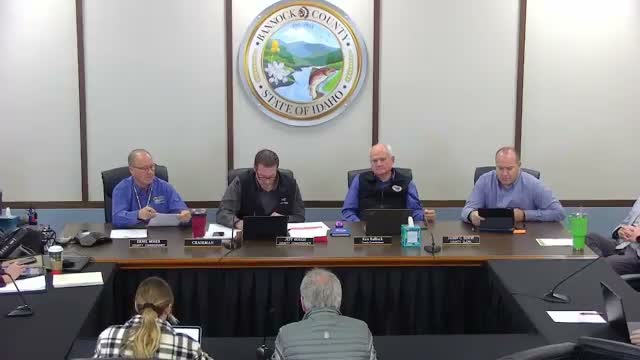
Summary
Planning staff told commissioners a required takings analysis and other statutory reviews will lengthen the county’s land‑use ordinance rewrite; removing the county’s long‑used 'multiuse' zone could affect hundreds of parcels and spur legal challenges unless property owners authorize rezones.
Bannock County planning staff told the Board of Commissioners on Dec. 30 that a previously anticipated first‑quarter finish for the county’s land‑use ordinance rewrite is now unlikely after legal review showed the county must perform takings analyses when rezoning properties.
Hal Jensen, planning director, said the rewrite originally aimed to correct zoning anomalies and remove an antiquated 'multiuse' category, but county legal requirements mean the process involves a property‑by‑property takings assessment that could add substantial time. “I wanted to have a document that works for the constituency of Bannock County…legally defensible,” Jensen said, explaining why staff stepped back to reassess their timeline.
Tristan Orkwan, assistant planning director, walked commissioners through a critical‑path schedule and said staff’s best‑case scenario depends on securing written authorizations from affected owners. Orkwan said staff will send letters inviting owners to discuss proposed rezones; if owners provide authorizations, the county can avoid many formal takings analyses with legal review and shorten the schedule.
Jensen and Orkwan flagged the county’s 'multiuse' zone — described in the 2008 comprehensive plan as overly broad and presently administered by director discretion — as the most complex change. Orkwan estimated the rewrite could affect “hundreds” of parcels, with corridors such as Taihi Road to Reservation Road concentrated with multiuse designations. Jensen said staff will propose a replacement zone called 'Ag‑10' to allow greater density on 10‑acre parcels than the current agricultural standard.
County legal counsel (referred to in the meeting as John) outlined the applicable legal standards: under the U.S. Constitution a regulatory taking requires depriving a property of all economically beneficial use, while Idaho law sets a lower bar and requires showing significant market impact for a viable claim. That higher Idaho‑level risk, counsel said, increases staff’s caution.
Commissioners asked about concurrent tasks, potential timelines, and where rezones could increase property tax exposure. Jensen said rezoning agricultural parcels to residential suburban might be sensitive because of perceived tax consequences, and staff emphasized outreach and in‑office conversations to explain tax and use implications before formal actions.
The presentation ends with staff asking for direction and permission to proceed under the revised timeline; commissioners did not adopt any ordinance that day but were briefed on next steps, which include owner outreach and coordinating takings analyses with county legal counsel.