Get Full Government Meeting Transcripts, Videos, & Alerts Forever!
Get email alerts on the Land Use Truck Parking topic
No spam. Unsubscribe anytime.
Stanislaus County adopts tighter truck-parking rules in agricultural zones
Summary
The Board of Supervisors unanimously adopted ordinance PLN20250069 to tighten truck-parking rules in A-2 agricultural zones, reducing home-occupation allowances, limiting parcel size for use permits, adding screening and setback requirements, and establishing a concentration threshold to limit clustering near rural residences.
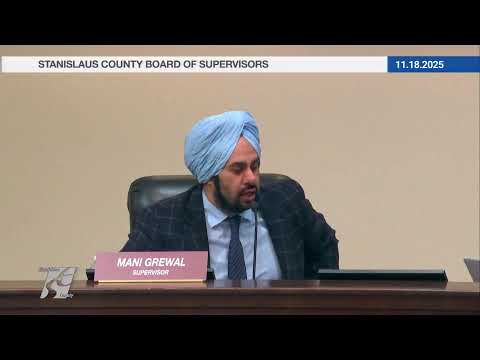
The Stanislaus County Board of Supervisors on Nov. 18 unanimously adopted an ordinance (PLN20250069) that revises county zoning rules for truck parking in A‑2 (General Agriculture) areas, aiming to reduce neighborhood impacts and clarify enforcement.
The ordinance reduces the number of trucks allowed under a home-occupation business license from three tractors and three trailers to one truck and two trailers, establishes a 10‑gross‑acre maximum for parcels seeking a use permit for truck parking, and prohibits light on‑site maintenance and truck washing where the new standards apply. It also requires 50‑foot setbacks from adjacent residences, 6‑foot solid fencing, landscape screening along road frontages, delineated parking stalls, annual code‑enforcement inspections for permitted sites, and fair‑share road‑repair contributions tied to the proposed truck route.
Senior planner Kristen Anaya, who led the staff presentation, said the draft attempts to balance the county’s need for safe truck parking with protection for agricultural land and nearby residents. She told the board the draft returns some allowances closer to the county’s pre‑2012 approach and added objective standards to prevent the kind of ‘‘creep’’ where home occupations expand without neighbor notice.
Neighbors and farmers both addressed the board during the public hearing. Christine Beverly, who said she represents residents living near several operations, urged stricter enforcement: "Please take these rules seriously," she told supervisors. Truck operators at the hearing asked how the rules would affect existing agricultural trucking operations; staff replied that sites already legally permitted or legal nonconforming uses would not be subject to the new requirements, while four pending use‑permit applications in process would not meet the new concentration and acreage thresholds.
The ordinance also defines a concentration test: within one mile of a state highway a property is considered to be in an area of concentration if there are more than two permitted truck‑parking facilities within a one‑mile radius of that property; in areas more than one mile from a state highway the threshold is stricter. The rule includes a geographic exception when a physical feature (for example, a highway that separates road networks) meaningfully limits shared access routes.
Supporters on the dais praised staff and the ad hoc process that produced the draft; several board members said it is a starting point that may require refinement after implementation and enforcement experience. The board voted to adopt the ordinance; staff said they will continue outreach and enforcement planning and will report back if changes are needed.
What happens next: The ordinance is effective as adopted. Staff will administer the new standards and continue coordination with code enforcement, planning and affected jurisdictions to implement annual inspections and fair‑share road payments where applicable.