Get Full Government Meeting Transcripts, Videos, & Alerts Forever!
Get email alerts on the Strategic Plan topic
No spam. Unsubscribe anytime.
Clay County updates strategic plan, sets KPIs and capital-project targets
Summary
At a workshop, county staff proposed mid-cycle changes to Clay County’s strategic plan: new KPIs (PulsePoint, paramedicine, volunteer metrics), clearer lane-mile and stormwater language, a capital target to deliver six fire stations tied to a $65 million bond, and a public dashboard for quarterly reporting.
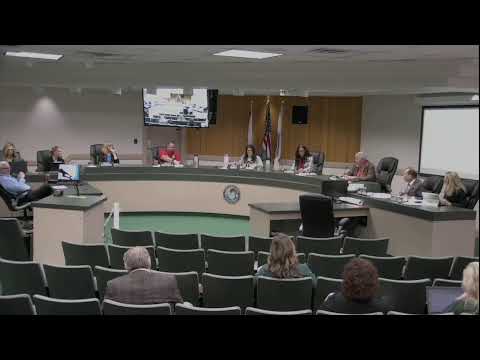
County officials on Thursday reviewed mid-cycle revisions to Clay County’s five-year strategic plan and proposed a new set of measurable key performance indicators to be reported on a quarterly dashboard.
Assistant County Manager Troy Nagel told commissioners staff reorganized the plan into a concise, color-coded packet and accompanying PowerPoint to make changes easier to track. "This was our attempt to trying to make this as easy as possible," he said. Staff recommended moving adoption of the updates in January and publishing a one‑page report card of strategic goals and KPIs each quarter.
The changes include public‑safety, infrastructure and governance items. In public safety, staff raised the county’s automated external defibrillator target and added paramedicine and veteran‑service contact counts, plus training metrics for hands‑only CPR and Narcan distribution. Fire‑rescue staff described a multiyear effort to improve the county’s ISO rating and said outside consultants and resource additions are part of that work.
Infrastructure edits clarify how resurfacing is measured — as lane miles rather than linear road miles — and separate stormwater ‘improvement’ projects from routine ‘maintenance.’ Public‑works staff warned that many stormwater improvements rely on outside funding and that, without a stormwater fee or other new revenue, some aspirational improvement targets may be unachievable.
The capital‑projects section adds a measurable to "design, permit and construct six fire stations and successfully execute the $65,000,000 in work against the public safety bond," staff said. Commissioners asked staff to refine wording and timelines and to ensure the dashboard tracks progress against bond spending and project schedules.
Staff also proposed higher targets in governance and communications — a 150% increase in public‑relations outreach where recent activity already exceeded earlier goals, and a focus on Alert Clay registrations as the primary emergency‑alerting participation metric.
Information‑technology reporting will include device and help‑desk metrics, tied to licensing and cybersecurity costs. "Our main goal is to ensure that we don't have equipment that's greater than 1 year past its end of life," MIS Director Dean Hain said, explaining the rationale for device counts as a workload and security measure.
Staff proposed replacing reprinted books with a simple sticker and QR code for existing printed copies and publishing a public dashboard so residents can view monthly-updated KPIs. Staff will return with refined metric definitions (for example, retention measured at 90 days, six months and one year) and a final draft for adoption in January.
Next steps: staff will circulate the updated wording and KPI definitions, populate the dashboard template, and return to the board for formal adoption. No formal vote took place at the workshop.