Get Full Government Meeting Transcripts, Videos, & Alerts Forever!
Get email alerts on the Behavioral Health Multiyear Funding topic
No spam. Unsubscribe anytime.
Larimer County reviews three multiyear behavioral‑health funding options; commissioners press on rural reach, workforce and navigation
Summary
Larimer County staff and consultant Corona Insights presented stakeholder‑driven options for a new multiyear behavioral‑health funding strategy — workforce development, cross‑organizational co‑location incentives, and a consumer access portal — and described a dynamic fiscal model intended to preserve reserves through the tax’s 2038 sunset. Commissioners asked about rural engagement, lived‑experience data, training standards, flexibility and braided funding; no vote was taken.
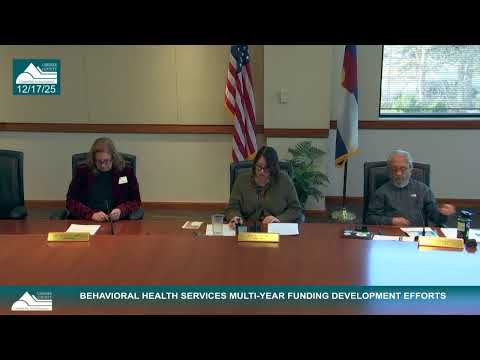
Larimer County commissioners on Dec. 17 heard staff and external consultants describe proposals for a new multiyear behavioral‑health funding framework that stakeholders ranked as priorities.
Amy Martinis, the county’s Behavioral Health Services director, and Corona Insights summarized months of engagement that produced more than 120 ideas narrowed into three priority solution areas: workforce development, incentives for cross‑organizational co‑location, and a consumer access portal or referral hub. Martinis said the proposals are intended to be system‑level investments distinct from the county’s annual impact grant program and its long‑term operations, including services at the Longview acute care facility.
Why it matters: Staff framed multiyear funding as an opportunity to make sustained, system‑level changes — from improving provider recruitment and retention to making services easier to find — while preserving a fiscal reserve through the sales tax’s current sunset in 2038. The county proposes using a dynamic financial model that factors fund balance trajectory, five‑year sales‑tax averages and Longview billing trends to set minimum annual funding for multiyear initiatives and to adjust maximums if revenue or operating conditions change.
What was proposed: Martinis described three options stakeholders elevated during facilitated sessions and prioritization work. The workforce option includes hiring a behavioral‑health workforce manager (a vacant FTE has been repurposed and recruitment is underway, with the position expected to be filled in February) to coordinate countywide recruitment, internships, credentialing and retention pathways. The co‑location option would incentivize shared community spaces and braided staffing supports to reduce duplication and barriers to access. The portal option would create an active referral hub — not just a directory — to speed access, enable warm handoffs and help both residents and providers navigate the system.
Key questions from commissioners: Several commissioners pressed staff on how representative the engagement was of rural and unincorporated parts of Larimer County. Staff and Corona said the outreach built on previously completed county plans, included virtual sessions and surveys, and listed participating organizations that serve places such as Estes Park, Wellington and Johnstown; staff also said they are extending outreach in remote communities (examples named during the session included Red Feather Lakes). Commissioners asked how lived‑experience and utilization data (including Longview patient origin data and partner reports such as Summit Stone’s) will inform implementation and whether the workforce option would be accompanied by meaningful training standards to avoid superficial short courses. Staff said utilization and partner data will be central to design decisions and that the workforce effort intends to align education partners, micro‑credentials and career pipelines to strengthen retention.
Budgetary and legal framing: County staff and the county manager cautioned that planning multiyear programs differs from formally obligating future boards to specific expenditures. The county’s proposed fiscal approach is to set recommended minimums within the regular budget process while maintaining flexibility to adjust spending based on sales‑tax performance and Longview operating trends. A commissioner asked whether the county could braid funds with recently approved Referendum 1B workforce dollars and other state or CSU resources; staff said they will explore braided and multi‑stream funding options during implementation.
Next steps: Commissioners did not take a formal vote. Several asked for additional one‑on‑one briefings with staff and Corona Insights to review details and data before providing a prioritization directive. Staff said they will return with more detailed budget requests and an evaluation design in 2026 and aim to begin implementing the funding framework in mid‑2026 pending further planning.
Representative quotes: "Behavioral‑health workforce initiatives were the number 1 prioritized need identified through the multi‑year funding engagement process," Martinis said. "We had over 120 ideas," a Corona consultant added. Commissioner Jody Shattuck McNally said she is leaning toward a "no wrong door" navigation approach to ensure people in crisis get prompt, coordinated next steps.
The work session closed with staff offering follow‑up meetings for each commissioner; the board adjourned without a decision or vote on a preferred option.