Get Full Government Meeting Transcripts, Videos, & Alerts Forever!
Get email alerts on the Planning Process topic
No spam. Unsubscribe anytime.
County boards discuss guardrails for PD waivers, notice and neighborhood meetings
Summary
Staff proposed percentage caps and other guardrails on common PD waivers (lot size, setbacks), recommended neighborhood meetings and larger notice requirements, and suggested the county host project pages rather than requiring applicant sites; commissioners asked staff to return with draft language.
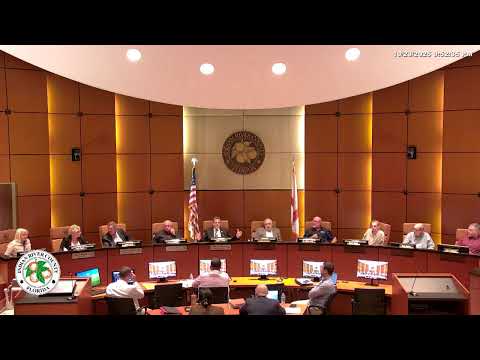
Indian River County staff asked the Planning & Zoning Commission and the Board of County Commissioners to provide policy direction on several procedural components of the PD process: guardrails on waivers (how far below minimums a PD can go), minimum project size, compatibility buffers, neighborhood meeting requirements, and public notice practices.
Guardrails and waivers: Staff recommended establishing either percentage‑based caps (for example, capping lot‑size reductions at 25% below the underlying zoning minimum) or fixed minima for particular zones (e.g., an RS‑3 lot minimum cap of 65 feet). Staff also advised explicitly stating that building height may not be waived through the PD process.
Minimum project size: Staff reported peer jurisdictions range from 5 to 200 acres and proposed 38 acres as a practical local minimum for single‑family PDs, with an exemption to allow smaller PDs if they provide a meaningful affordable‑housing component.
Compatibility and setbacks: Commissioners criticized examples of 5‑foot setbacks and generally supported a practical minimum around 7.5 feet; several said drainage, maintenance and emergency‑access considerations argued for avoiding overly tight side yards.
Public engagement and notice: Staff recommended requiring developer‑hosted neighborhood meetings after technical review (TRC) and increasing mailed notice radii and on‑site signage. The idea of requiring applicant‑maintained project websites drew mixed reaction; commissioners favored a county‑hosted or staff‑checked page to ensure accuracy and accessibility.
Process timing: Several private‑sector speakers urged earlier, more predictable feedback to avoid multi‑month delays that raise carrying costs for projects. Commissioners asked staff to draft workable guardrails that preserve PD flexibility while giving enough predictability to applicants and neighbors.
Ending: Staff will return with draft code or policy language and a plan for stakeholder outreach at a January follow‑up meeting; no votes were taken at the workshop.