Get Full Government Meeting Transcripts, Videos, & Alerts Forever!
Get email alerts on the Economic Development topic
No spam. Unsubscribe anytime.
Commission backs county rules for food trucks, citing state preemption and local location limits
Summary
The Planning & Zoning Commission unanimously recommended county land‑development amendments to allow and regulate mobile food dispensing vehicles in specified commercial and industrial zones, set hours and site standards, require property‑owner consent and prohibit overnight parking except for special events; staff said state statutes preempt local licensing but allow location and safety rules.
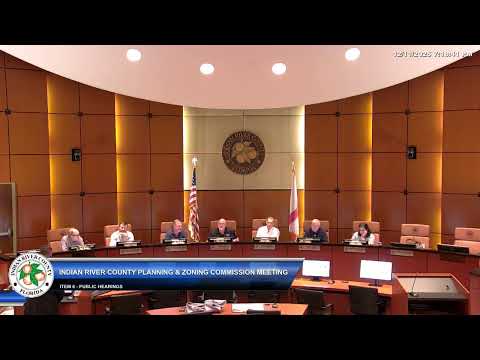
The Indian River County Planning & Zoning Commission on Dec. 11 recommended that the Board of County Commissioners adopt land‑development regulation amendments to regulate mobile food dispensing vehicles (food trucks) in unincorporated county jurisdictions.
Staff presenter Brandon said the proposed text mirrors direction given by the Board earlier in 2025 and follows Florida statutory preemption for mobile vending (citing sections 509.102 and 509.12 of the Florida Statutes). The proposed rules would allow food trucks in CH (commercial heavy), IL (industrial light), IG (industrial general) and commercial PD zoning districts, limit placement so trucks do not obstruct sidewalks, building entrances, drive aisles or fire lanes, and require written property‑owner consent to operate on private property.
On hours and overnight presence, staff said the commission directed a general operating window of 7 a.m. to 9 p.m. with a requirement that vehicles vacate the premises by 10:30 p.m. unless authorized as a part of a special event. Staff emphasized that the county cannot impose a local business license or a county food‑service permit separate from state licensing but retains authority over location, traffic and site compatibility.
Commissioners raised enforcement and practical questions: whether trucks at county parks would be handled as special events (staff said yes), how to treat semi‑permanent vending at places such as Walmart or Sam's Club, and whether there will be a standardized form for property‑owner consent. Ryan Sweeney noted a likely grace/transition period for existing operators and said nightly removal rules aim to keep vendors mobile and manageable for code enforcement: "Remove it every night, come back tomorrow, and, you know, I understand it may be inconvenient for the operator, but the intention is for them to be mobile," he said.
Staff said food trucks must display a valid state license and health inspection reports, supply self‑contained refuse and liquid waste storage, use power in compliance with building and fire codes, and refrain from inflatable or flashing freestanding signage. The commission voted unanimously to recommend the LDR amendments to the Board of County Commissioners.