Get Full Government Meeting Transcripts, Videos, & Alerts Forever!
Get email alerts on the Salary Recommendation topic
No spam. Unsubscribe anytime.
Madison County panel recommends pay increases for elected officials; supervisors to remain at 0%
Summary
A Madison County organizational committee voted to recommend a pay package to the board of supervisors that would set most elected officials at a 5% increase, set the auditor at 3%, and leave supervisors at 0%; the motion passed by voice vote after extended discussion about retention and budget trade-offs.
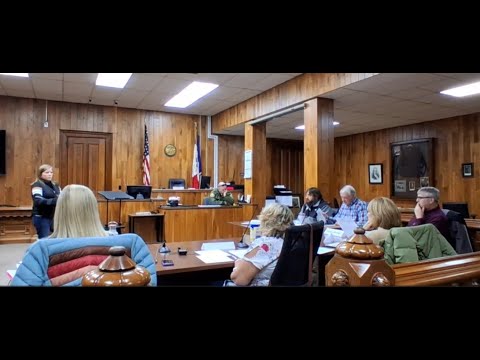
At a Madison County organizational meeting, the advisory group charged with recommending elected-official pay voted to recommend that most county elected offices receive a 5% pay increase for the coming fiscal year, with the county auditor set at 3% and county supervisors remaining at 0%. The group approved the recommendation by voice vote; the transcript does not record a roll-call tally.
The proposal emerged after members cited retention concerns and comparisons with neighboring counties. An unidentified speaker who stepped into the discussion cited statistics attributed to "Sheriff Barnes," noting an increase in service calls and a staffing breakdown that the speaker said supports higher pay to retain leaders and deputies: "I would recommend at least a 3% raise" (unidentified speaker, see meeting transcript). Members also noted that deputies in nearby Dallas County earn substantially more, creating a retention risk if local pay remains low.
Several elected officials and staff gave operational updates that framed the debate. Brandy, the treasurer, described rising motor-vehicle title and registration work from nonresidents that creates some additional fee revenue; Michelle Grant, the newly elected auditor, outlined rebuilding of the auditor's office and an outsourcing arrangement for IT and HR tasks. Those operational pressures were cited by some members as reasons to consider raises for smaller offices that carry heavy workloads.
Committee members debated multiple options before settling on the final recommendation. Earlier motions—such as 3% across the board with supervisors at 0%—failed for lack of a second. The ultimately approved motion was moved and seconded on the record and carried by voice vote; the meeting transcript does not provide names for the mover or a second in the final recorded lines (the chair called for ayes and the motion "carried").
The committee noted that its action is a recommendation to the board of supervisors, which has final authority over the budget and pay decisions. Members emphasized that the recommendation is nonbinding: "They're going to have the ultimate say in this," one participant said during debate. The meeting concluded with a calendar item (next meeting set for November 30, 2026) and adjournment.
Notes on the record: the transcript contains numeric staffing and service figures cited by speakers (for example, dispatch calls, deputy counts and title counts), but it does not record a formal roll-call vote or a numeric tally for the recommendation. Where names or precise vote counts are absent from the transcript, this article attributes statements only to speakers identified in the record or to "an unidentified speaker" when a name or formal title is not given.