
Madison County supervisors review budgets, shift outside-counsel costs and raise training allocation
Get AI-powered insights, summaries, and transcripts
Subscribe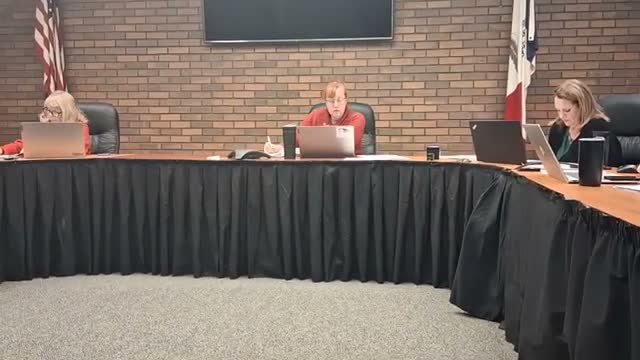
Summary
Madison County supervisors reviewed the supervisors’ departmental budget, agreed to reclassify previously billed outside-counsel costs into a supervisors’ legal line, raised the training allocation to $1,200, and discussed gaps in backup procedures after a prior budget deletion. The board approved the meeting agenda at the start of the session.
Madison County supervisors spent a budget planning session reviewing the supervisors’ department budget, reclassifying outside-counsel charges and adjusting training and travel lines.
Speaker 1, a member of the Madison County Board of Supervisors, opened the meeting and said the session would focus on the supervisors’ budget and the proposed transfer of outside-counsel expenses from department 99 into the supervisors’ account. "We'll go ahead and approve the agenda," Speaker 1 said at the start; the board voted and "Motion carries." (Transcript attribution: Speaker 1.)
The core technical change discussed was moving outside-counsel invoices historically charged to department 99 into a new supervisors’ legal line. Speaker 2, the county budget staff member who presented the spreadsheet, said the new GL code had been activated and that $78.39 had already been paid out of department 99 with additional pending invoices. Speaker 2 summarized the proposed total to be reflected in the supervisors’ legal budget at about $70,900 to account for amounts already paid plus pending bills. "Yes," Speaker 2 said when confirming the code activation and totals. (Transcript attribution: Speaker 2.)
Board members pressed for clarity on how the transfer would affect department 99’s available balance. Speaker 1 asked whether moving the $78.39 would reduce the department 99 legal line from $10,000 to roughly $21.61. Speaker 2 explained that removing paid items from department 99 would reset the 'used' column and leave the budgeted amount available unless the board instructs further reductions.
The supervisors also agreed to increase the education and training allocation to $1,200 to cover unanticipated training needs and legislative-driven open-records or security requirements. Speaker 3 proposed the $1,200 figure as a practical middle ground; Speaker 2 confirmed changes to mileage and dues lines as well, recommending employee mileage remain at $1,000 and membership/dues at $400 pending confirmation on how ISAC dues are allocated across departments.
On employee benefits, budget staff told the board they had modeled an 8% increase in the county’s health-insurance contribution as a worst-case assumption and planned to reconcile final contribution numbers with the county’s benefits vendor in March in time for the statutory filing (first notice to the state by March 31).
The board also discussed administrative housekeeping: Speaker 2 said they would compile a list of inactive ledger items for removal after the session, and the group reviewed historical fund coding that can affect where particular expenses appear in multi-year records.
Finally, supervisors raised a prior incident in which a budget was reportedly deleted and asked for assurances about backups and restoration procedures. Speaker 2 said vendor 'solutions' had restored data in two prior incidents and had provided an explanation to county staff; the board asked for written documentation to ensure repeat occurrences are prevented.
The meeting record begins with a procedural motion that was approved by voice vote. No new ordinance, resolution, appointment or formal budget adoption was recorded in the transcript excerpt; speakers primarily reviewed proposed line-item adjustments and coding changes and directed staff to update the worksheets and provide clarifying documentation.
Next steps: budget staff will update the worksheets to reflect the agreed changes (education/training $1,200; mileage $1,000; membership/dues $400; supervisors’ legal line updated for the transferred outside-counsel invoices) and will provide backup documentation related to the budget-deletion incident and a list of candidate inactive ledger items for removal.