Get Full Government Meeting Transcripts, Videos, & Alerts Forever!
Get email alerts on the County Finance topic
No spam. Unsubscribe anytime.
Barnstable County finance director warns expenditures will outpace revenue by 2028 in 10-year forecast
Summary
Finance Director Carol Coppola told the Assembly that under conservative revenue assumptions the county faces a structural gap beginning around 2028 and that a potential $45 million PFAS borrowing would deepen the shortfall, prompting calls for policy changes and revenue options.
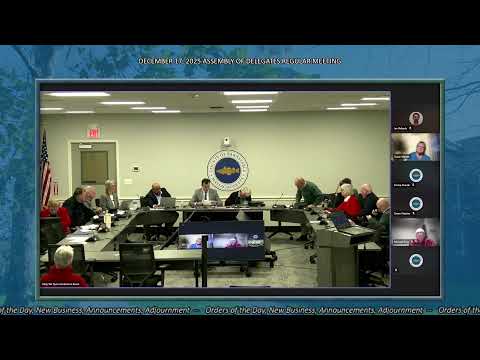
Carol Coppola, Barnstable County finance director and treasurer, told the Assembly of Delegates on Dec. 17 that a newly prepared 10‑year forecast projects county expenditures will begin to exceed revenues in 2028 without policy changes or new revenue sources. Coppola presented first‑quarter FY26 results and a forecast prepared with the county’s financial analyst, Megan Rogers, and outside consultants.
"The finance department, as of September 30, was managing over $76,000,000 in funds," Coppola said, and added that the county’s unaudited unreserved fund balance as of June 30, 2025, was "just under $11,000,000." Coppola said those reserves meet some best‑practice thresholds but will not be sufficient under the forecasted trajectory.
The forecast uses a hybrid methodology — historical trends, tempered compound annual growth rates, weighted averages and stress tests — and assumes more conservative growth for registry‑of‑deeds revenue than recent years. Coppola said the county modeled a scenario with a potential $45 million PFAS borrowing and found that, with that debt service, the county would exceed an internal 10% debt‑service metric by about 2030 and move into a sustained negative budget position.
"Beginning in 2028, your expenditures exceed your revenue," Coppola said, summarizing the baseline projection. She told delegates that salary and fringe costs and debt service are the largest drivers of future expenditures and that the county used multiple scenarios (with and without PFAS borrowing) to test resilience.
Administrators and delegates pressed for clarity about assumptions. Coppola said the county tempered an initially high compound annual growth rate for registry revenue (reported earlier in the presentation as 3.6%) to a lower, more cautious projection and used a 5% growth assumption for laboratory fees. The forecast also assumed a constant investment balance ($25 million) at a 3.25% yield for modeling purposes.
County leadership framed the forecast as a planning tool and proposed immediate policy work. Administrator Dutton said leadership will draft updated financial policies that define a structural deficit, set formal reserves rules and explore revenue options. "We have to take a close look at the expense side," Dutton said, and also urged examining potential revenue expansions and shared regional services to reduce exposure to volatile registry receipts.
Delegates asked for procedural and presentation changes to improve interpretability — for example, adding short explanatory notes to line items that spike above typical percentages because of timing (retirement assessments due July 1, one‑time payments) — and Coppola agreed to provide more context in future reports.
The Assembly did not take immediate binding action on the forecast at the Dec. 17 meeting, but leadership said the presentation will inform forthcoming ordinance proposals (including a transfer to the capital stabilization fund) and a policy work program to be developed in the coming months.