Get Full Government Meeting Transcripts, Videos, & Alerts Forever!
Get email alerts on the Land Use topic
No spam. Unsubscribe anytime.
Planning commission forwards Title 17 changes to council to regulate commercial gaming: 25% landscaping, 20-foot side/rear setbacks
Summary
The Planning & Zoning Commission voted to send two recommended amendments to Title 17 to city council: require 25% of a gaming lot be landscaped (with the majority on sides/rear) and set 20-foot minimum side and rear setbacks for C-1 gaming uses; staff will provide ordinance language to council.
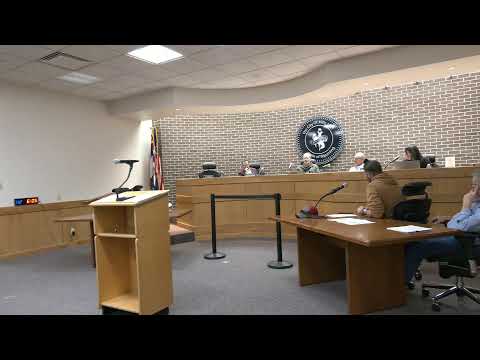
The Planning & Zoning Commission on Dec. 6 voted to forward proposed amendments to Title 17 that would create a special-use framework for commercial gaming and simulcasting and impose new landscaping and setback requirements.
Commissioners agreed to recommend a requirement that 25% of the entire lot be dedicated to landscaping for the gaming special use, with the majority of that landscaping located on the sides and rear of the property to provide buffering for adjacent lots. The commission also approved a minimum 20-foot side and rear setback for the C-1 commercial zoning designation when used for the gaming special use. Both motions passed by voice vote and will be presented to city council for consideration.
Why it matters: commissioners said the provisions aim to limit impacts on nearby residential areas and to make parking and security operations clearer for a use that can include large floor areas and amplified noise. The amendments would not themselves approve a project; they are a change to the zoning code that would govern how future gaming facilities are permitted or restricted.
City staff and commissioners debated several operational and design details before voting. A recurring operational question was how to align hours of operation for gaming with liquor licensing. Casey, presenting staff analysis, said hours were adjusted "to mirror liquor licensing" in recent council-level changes. Commissioners also discussed parking—staff noted the existing draft treats gaming-space parking at roughly one space per 100 square feet of gaming floor—and enforcement of noise limits, a point one commissioner raised by quoting the current draft’s language: "noise or amplified sound or vibration shall not be audible beyond the property line." A staff member cautioned that affixing a decibel limit is difficult in practice, while buffer and setback rules are more administrable.
Casey summarized the limits of administrative flexibility under the code: "Those special uses have to be approved by the council," which staff said reduces the Planning Department’s ability to unilaterally grant large deviations from the standards. Staff committed to draft ordinance language for council; Casey said versions for both the landscaping and setback changes would be ready for the council work session the following night.
What the commission did not do: commissioners declined to set a minimum building square footage for gaming use—several members warned that a large minimum (for example, 100,000–150,000 sq. ft., floated during the discussion) would effectively preclude many potential applicants.
Next steps: staff will provide ordinance drafts to council. Any change to Title 17 would become effective only if and when council adopts an ordinance on the matter.
Quotes from the meeting: "It's just that the...it's semi prohibited, but it is doable if someone wanted to," Casey said when describing how the draft code treats gaming uses. "Noise or amplified sound or vibration shall not be audible beyond the property line," a commissioner said while raising enforcement concerns about the draft standard.
The commission recorded the motions as forwarded to council; mover/second information was not specified in the transcript and is therefore recorded as not specified in the official action log.