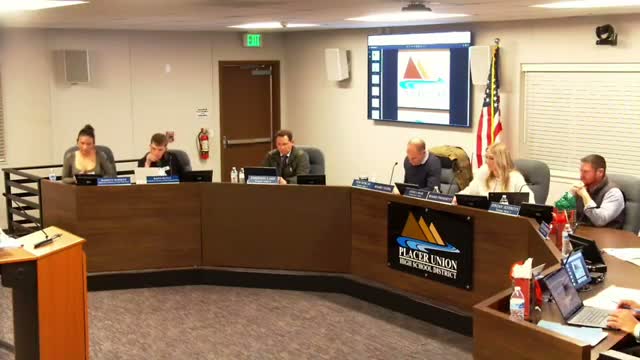
Placer Union HSD certifies first interim budget despite projected deficit, flags multiyear shortfall
Summary
The Placer Union High School District certified a "positive" first interim budget for 2025———26 while staff warned of a multiyear deficit driven by rising salaries and declining enrollment; trustees approved budget amendments and asked administrators to identify further savings.
The Placer Union High School District board on Dec. 18 certified its first interim financial report for 2025———26, approving a package of budget amendments while acknowledging looming multiyear deficits.
District finance staff told trustees the general fund is projected to bring in about $64.8 million in revenues against roughly $69.7 million in expenditures, with classified and certificated salaries and benefits accounting for about 82% of spending. Staff said required contributions to special education and routine maintenance and other transfers reduce the district's fund balance and that the district projects enrollment declines in coming years.
"Our net decrease in fund balance is going to be about $2.2 million, leaving an ending balance of about $5.4 million," the presenter said, noting transfers in (including proceeds from a land sale and a transfer from the tech endowment) helped offset the shortfall.
Trustees pressed for clarity on which accounts were restricted and asked whether certain one-time transfers and reserves can be relied on in future years. The business officer said the district has used one-time state and federal grants in prior years and must plan for those funds to end. The presenter warned that continued deficit spending would draw down reserves and that use of the special reserve (fund 17) is projected to decline sharply over the next two years.
The board approved a companion resolution amending the 2025———26 budget to reflect updated revenue and expenditure estimates and certified the first interim as "positive". Trustees also directed staff to continue working with the district's budget advisory group to identify further savings and to minimize classroom impacts.
Next steps: staff will report back to the board after the budget advisory group meets and will monitor state COLA decisions and enrollment trends that could alter projections.