Get Full Government Meeting Transcripts, Videos, & Alerts Forever!
Get email alerts on the Roads Maintenance topic
No spam. Unsubscribe anytime.
Board moves $750,000 to secondary roads; resident tells supervisors road work must happen next spring
Summary
Supervisors approved a $750,000 transfer from rural services to secondary roads and heard an extended public comment from a resident who described chronic drainage and surface problems on Ridge Road and 260th; county roads staff pledged restoration of the rural cross section starting next spring and said work should make the segment paveable if easements and weather permit.
Marshall County supervisors approved a $750,000 transfer from the Rural Services Fund to the Secondary Roads Fund during their Oct. 22 meeting and heard a lengthy public forum from a resident describing persistent road and drainage problems.
The funding transfer was presented as the board's normal quarterly movement of money between funds to support secondary-roads work; the motion to transfer $750,000 was moved, seconded and approved by roll call.
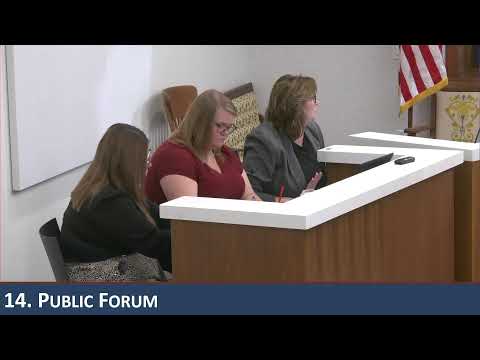
During the public forum, Mark Wyant of 2601 Ridge Road described repeated washouts, tall aggregate berms above roadway grade, poor drainage, and the resulting effect on property values and livability. Wyant said neighbors had petitioned previously for paving and urged the board and roads staff not to leave the condition as the status quo.
Paul (county roads staff; role described in the record but not formally titled), responding to Wyant, said the secondary-roads department is largely engaged in maintenance but pledged a restoration of the rural cross section on the reported segment next spring. Paul said the department cannot move dirt in winter, that work is weather- and easement-dependent, and that staff will seek temporary private easements if needed. He gave a target that visible restorative work on Ridge Road and 260th would be completed by July 1, 2026, assuming easements and weather cooperate.
Supervisors asked whether the spring restoration would prepare the road for future paving if additional revenue (for example, from local development or project-derived taxes) became available. Paul said establishing a sustainable grade is necessary before paving and the planned work is intended to achieve that grade; he cautioned that sight-distance and speed limitations on the curves may limit posting to about 25 mph even if paved. Board members and county staff also discussed short-term fall options and the limited protective effect of guardrails at higher speeds.
The board's transfer vote and Paul's commitment signal a timeline for physical work next construction season, while longer-term paving still depends on funding and right-of-way agreements.