
Attendee says vehicle video showed he failed to stop; speakers note growing role of recorded evidence
Get AI-powered insights, summaries, and transcripts
Subscribe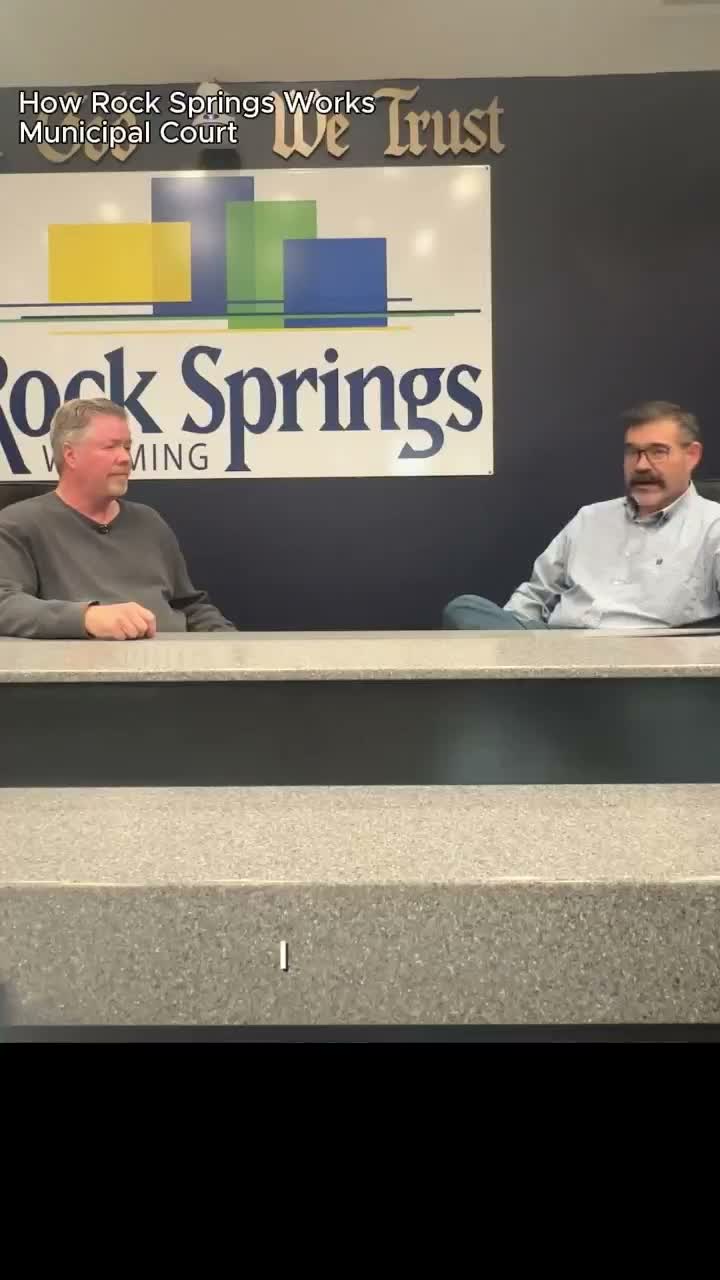
Summary
At a Rock Springs City Council meeting, an unidentified attendee described a traffic stop where vehicle video showed he rolled through a stop sign, and another participant said recorded evidence (including officer-mounted video) is increasingly used in traffic cases and court reviews.
At a Rock Springs City Council meeting, Speaker 1, an unidentified participant, recounted a traffic stop in which he later learned vehicle video showed he had failed to stop at a sign.
"I actually, once appeared in front of the judge over a traffic stop. I missed a stop sign," Speaker 1 said. "When I was shown the video, I was like, oh, shoot. I did not, did not not stop and paid my fine and moved on with life." He added that seeing the recording made him accept the officer's account: "He was totally right. I did not."
Speaker 2, an unidentified participant, described how recorded video is being used in courts. "That has helped courts on, reviewing evidence and having trials that many of the traffic offenses are recorded now," Speaker 2 said, citing recordings from "Officer Warren" and mounted video on police vehicles as primary sources.
The exchange highlighted the practical effect of recordings in traffic enforcement: one speaker said his recollection differed from the video, and another noted that courts increasingly review such evidence in proceedings. No formal motion or vote on policy was recorded in the provided transcript.
The discussion underscores how recordings from officers' vehicles and other cameras can change case outcomes and public perceptions of traffic enforcement.