Get Full Government Meeting Transcripts, Videos, & Alerts Forever!
Get email alerts on the Public Safety Equipment topic
No spam. Unsubscribe anytime.
Chickasaw County approves purchase of six AEDs for county buildings
Summary
Supervisors voted to buy six automated external defibrillators for county facilities after staff recommended a bilingual, lower-cost option and discussed warranty, storage and training needs.
Chickasaw County supervisors voted Nov. 24 to purchase six automated external defibrillators (AEDs) to place in county facilities, approving a motion that is contingent on confirmation from the county engineer and the county conservation director.
County staff told the board that replacement pads for the county’s existing units cost about $527 per machine and that units differ on warranty, temperature sensitivity and bilingual capability. Staff recommended a bilingual model they identified as a cost-effective option at about $1,614 per unit, noting training-kit and battery expenses and that some devices require more temperature-controlled storage than others. "I think the Avaya is the best option," a staff member said during the presentation.
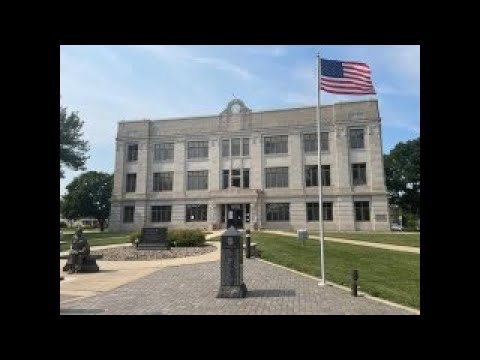
The approved purchase covers one AED for the Community Service Building, one for the Heritage Building, one for the courthouse, one for the main shop and two for county conservation. The motion was made by Supervisor Scott and seconded by Supervisor Isaac; the board completed a roll-call vote and carried the motion unanimously with two supervisors absent.
The staff presentation also outlined maintenance expectations: annual charging for some units, pad replacement rules (pads may be provided free if used), and training requirements, including a recommended training kit. Supervisors discussed where current units are located (public health, heritage building, secondary roads, airport and conservation) and whether devices with strict temperature requirements would be suitable for locations such as the airport.
Next steps include engineering and conservation sign-off, ordering the units and coordinating budget coding for purchase and ongoing maintenance costs. The board did not set a specific delivery timeline in the meeting minutes.