Get Full Government Meeting Transcripts, Videos, & Alerts Forever!
Get email alerts on the Snow Closure topic
No spam. Unsubscribe anytime.
Officials discuss snow-closure approach and staff pay; chair assigns decision authority
Summary
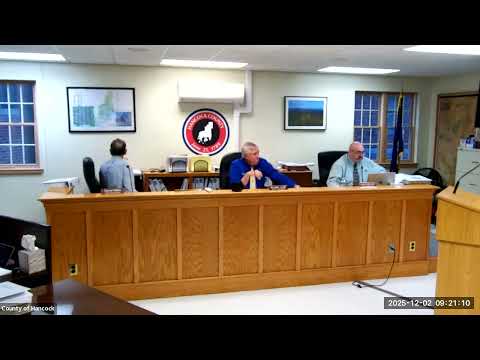
Meeting participants debated whether county offices should follow court or state closures during a forecasted snowstorm and discussed paying staff four hours when offices close; the chair asked the staff member addressed in the meeting to decide and update the group.
Speaker 2 raised concern about an expected snowstorm and asked how the group should handle office closures and staff pay for the current day. "We're expecting snow here today," Speaker 2 said, adding that the practical question was how to treat employees scheduled during a closure.
Speaker 2 said the county would "pay basically the remaining time of 4 hours to the unit that has that written into their contract" and confirmed that staff scheduled during the closure would be compensated. Speaker 1 clarified distinctions between union and nonunion staff: "So we pay all employees that you shouldn't call? Non union." Speaker 2 confirmed the nonunion status and discussed a four-hour minimum referenced for union time.
The two speakers debated whether the county should simply follow closures announced by the courts or the state. Speaker 1 said the county generally prefers not to close when courts remain open, while Speaker 2 cautioned that rigidly mirroring other entities has led in the past to paid time off when storms did not materialize. Speaker 2 described evaluating the "totality" of factors rather than relying on a single trigger.
Speaker 1 emphasized employee safety and practical scheduling, noting personal experience with school schedules during storms and arguing the county should aim to let employees get home before dark. On operational responsibility for this storm, Speaker 1 directed the staff member who had raised the issue to decide what to do and to keep the group updated; Speaker 2 agreed to do so.
The meeting concluded with a procedural motion: Speaker 1 moved to adjourn; Speaker 2 seconded. The transcript records three affirmative "Aye" responses and the chair stated the meeting was adjourned. The transcript does not clearly identify each individual vote by name.