
County demonstrates mobile brine system and tanker for winter road treatment
Get AI-powered insights, summaries, and transcripts
Subscribe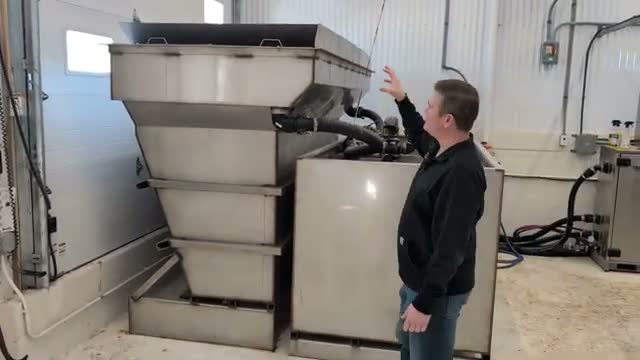
Summary
A county presenter demonstrated a brine-making system and converted tanker used to produce, store and distribute salt brine mixed with calcium chloride for pre-treatment and anti-icing on county roads, citing a target brine reading of “23.3.”
An unidentified county presenter described a brine-making and distribution system Wright County uses to supplement plow-and-salt operations this winter.
The presenter said the system produces salt brine by placing solar salt in a hopper, circulating water until a target salinity is reached, and transferring the mixture into 6,900-gallon holding tanks. "That level is 23.3," the presenter said, referring to the brine salinity reading. The facility holds three tanks of straight salt brine and two tanks containing a calcium chloride premium liquid deicer, which staff can blend with brine at different ratios depending on temperature.
The county uses a converted 6,000-gallon milk tanker, fitted with internal baffles to reduce slosh, to move brine from the main facility to satellite shops. At out shops, crews pump the product into dual-wall tanks so crews can access brine across the county. The presenter said the tanker is also fitted with a spray bar and can be prefilled to drive selected routes and apply anti-icing before storms.
"Salt brine is by far the cheapest product we can produce to fight snow and ice with," the presenter said, explaining the cost rationale for on-site production. The presenter gave example mixes — for instance, 80% brine with 20% premium deicer or 70/30 — and said greater proportions of premium deicer are used at colder temperatures to maintain effectiveness below freezing.
The presenter likened anti-icing to coating a frying pan so food does not stick, saying the goal is to prevent ice and snow from adhering so it "peels off" the roadway. The demonstration focused on operational details — production, storage, transport and application — and did not include any vote or formal action during the session.
No additional personnel names, formal motions, or legal authorities were cited during the demonstration.