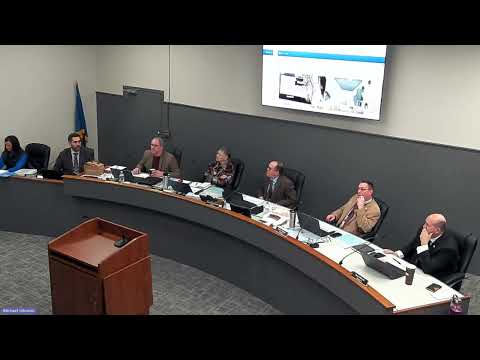
Waseca County weighs a smaller, phased courthouse/annex plan to save costs; sheriff's space, security and parking under review
Loading...
Summary
County staff presented a scaled alternative to a larger November 2022 plan that could cut square footage and costs (roughly $10 million–$13 million); commissioners asked for renderings, cost detail and a phasing plan while the sheriff flagged space, evidence storage and training needs.
Staff presented a scaled, phased alternative to the larger courthouse/annex plan first discussed in November 2022, saying the smaller model could meet program needs while reducing cost and preserving the existing Sheriff Administration building.
"The low end of what they have here, $10,000,000, the high end, $13,000,000," said a county staff member (Speaker 3), describing program-area estimates and a total program footprint the presentation estimated between roughly 15,000 and 22,000 square feet depending on final scope. Staff said some placeholder costs remain uncertain—examples cited included a $350,000 allowance for site work and an estimated $250,000 for water-main remediation under the building, with full plumbing replacement described as multiple times that amount.
The proposal emphasizes reusing and remodeling existing spaces where practical, changing interior layouts so customer-facing service windows sit closer to primary entrances, and using a phased approach to limit staff displacement. "We'd probably bond for $10,000,000 and pay cash for $3+ million," the staff member said when outlining financing options, adding the county could also draw on reserves while municipal bond programs persist.
Commissioners pressed for visuals and more precise numbers. "I'd like to see a visual to show how this fits," one commissioner (Speaker 5) said, asking for renderings, blocking, stacking and parking plans before a final decision. Multiple board members stressed that courthouse repairs and jail security needs should be planned distinctly even if related to the same broader project.
Sheriff (identified in the transcript; Speaker 9) described operational needs that must be accommodated if the administration is reconfigured: firearms storage, weapon-cleaning and training space, confidential interview rooms for permit applicants, and an evidence room the sheriff said is "bursting" and needs long-term storage solutions. "We have no space to meet with citizens confidentially," the sheriff said, urging dedicated, secure spaces and additional storage and training capacity.
The board discussed secure inmate transport options, including a dedicated hallway or tunnel to limit public exposure during transfers, and debated the trade-offs between a closer connection to the jail and preserving garage access. Several commissioners emphasized exterior improvements so any renovated or retained 1960s-era buildings would not continue to present as a bunker-like facade.
On financing, staff and the board discussed timing: design and bidding could take 10–20 months and, if the board directs staff to proceed, construction could start in 2026. Staff said one advantage of acting soon would be using favorable tax-exempt municipal bond rates that might not be available later. The county's reserve position was cited as strong enough to combine bond proceeds with cash for phased work.
The board did not adopt a final plan at the meeting but signaled support to pursue the scaled alternative and requested renderings, updated cost estimates from consultant Winsett (as referenced in the staff packet), and a phasing plan that protects courthouse functions and the sheriff's operational needs. Staff said it would return with visuals and more detailed budget numbers in the coming weeks.
Next steps: staff will ask the design consultant to produce revised plans and 3-D renderings under the scaled model, provide a refined cost estimate (including utility and site work contingencies), and return to the board for direction on bonding and a phased construction schedule.