Get Full Government Meeting Transcripts, Videos, & Alerts Forever!
Get email alerts on the Ethics Investigation topic
No spam. Unsubscribe anytime.
Ottawa County commissioners decline two proposals to form special ethics investigation committees
Summary
The board voted down two motions to form ethics‑investigative committees—one concerning Commissioner Josh Brugger and another about Commissioner Joe Moss—after months of public comment and internal debate about the board’s 3‑quarters vote threshold and whether complaints met the policy’s procedural threshold.
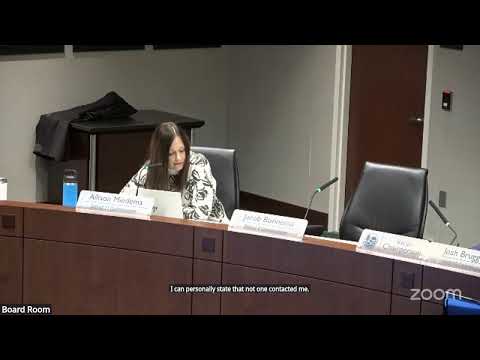
The Ottawa County Board of Commissioners on Dec. 25 rejected two separate motions to form special committees under the county’s code of ethics to investigate complaints against Commissioners Josh Brugger and Joe Moss.
The Brugger motion, which commissioners debated as a threshold question about whether the complaint warranted an inquiry, failed on a roll call after numerous commissioners said available email exchanges and responses did not show malicious intent and therefore did not meet the ethics policy standard. One commissioner argued the matter appeared to be a communication mistake and opposed expending public funds on a special investigation.
Board members returned to a second, higher‑profile motion to investigate complaints about Commissioner Moss’ handling of a Dec. 10, 2024 closed session. Supporters of investigation said earlier closed‑session handling and subsequent public reporting left factual gaps that merited review. Opponents argued commissioners had already exposed the underlying facts via prior meetings and minutes, and that another probe would be costly and divisive.
Chair [Title not specified in transcript] summarized his view that the board had done what it could to make facts public and said continued investigation would be a waste of time and money. Commissioner [name withheld when not specified] said, “It is time to end this matter. We are at that end,” urging the board to move on to other county priorities.
County corporate counsel had advised the board that the ethics policy—adopted by the board—may legitimately set a higher procedural threshold (three‑quarters vote) to initiate certain investigatory steps under MCL 46.11 and related county code provisions. Counsel also told commissioners that, absent a statutory conflict of interest, members named in complaints retain the right to vote on procedural measures.
Both motions failed on roll calls. Supporters of investigation said they were disappointed; opponents noted the decision closed a chapter they said had distracted the board from budgetary, public‑safety and planning matters. Several members of the public urged the board throughout the meeting to clarify how the county’s ethics threshold aligns with Michigan law.
The board moved on after the votes to other scheduled business.