
Brown County approves solar-energy zoning amendment after public comment on size and setbacks
Get AI-powered insights, summaries, and transcripts
Subscribe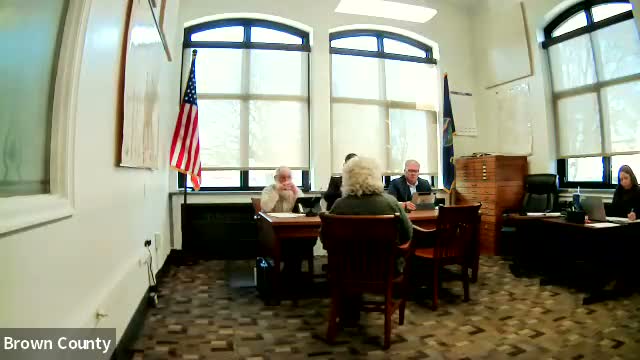
Summary
Brown County Commissioners approved two solar-energy resolutions, including a zoning amendment for solar-conversion projects, after public comment urged looser size limits and clearer neighbor-consent language. Commissioners said the measures can be amended and invited further public engagement.
Brown County Commissioners voted Nov. 26 to adopt two measures intended to govern commercial solar-energy conversion projects, approving Resolution 2025-19 (general police-power authority) and a zoning amendment (Resolution 2025-20) that sets conditions and limits for solar installations.
The actions followed extended public comment from Laura Portmeyer, who identified herself as an East of Fairview land steward and sheep grazer with more than 30 years in agriculture. Portmeyer told the commission she supports some solar development but urged changes to proposed limits, citing a county survey she said showed roughly two-thirds of respondents either supported industrial solar or were unsure. “So my asks are to reconsider the size limitation of 12 acres of total land area,” she said, and suggested a 50-acre threshold for projects that incorporate dual-use agriculture (agrivoltaics). She also questioned a proposed 15-mile separation standard and the rule that “no project facility should be located within 1 mile of any existing inhabited dwelling without the written consent of the owner and resident at the time the operation is commenced,” saying the phrase “operation is commenced” needs clearer drafting tied to approval or project start.
Commissioners and planning-commission representatives said they had reviewed national examples and local concerns and wanted discretion to avoid problems seen in other counties. A planning-commission representative and commissioners discussed whether separation distance should be measured “as the crow flies” or by road miles; commissioners indicated the draft is intended as a radius measure. Commissioners emphasized the resolution and zoning amendment are not immutable: the board can amend the measures if specific projects or evidence warrant changes and signaled plans to host additional informal, quarterly meetings next year to solicit more public input.
The commission approved Resolution 2025-19 and Resolution 2025-20 by voice vote after motions were made and seconded. Chair (Unidentified Speaker 1) said the measures had gone through the planning commission and a recent work session and that procedural requirements for public interaction had been met.
Portmeyer and other commissioners discussed agrivoltaics opportunities — grazing sheep under panels, shade benefits, frost mitigation and reduced irrigation — and the practical challenges developers and installers raise when integrating livestock. Portmeyer told the board that contracts and decommissioning plans should be strong and that smaller community-minded developers exist, even as she expressed wariness of large multinational investor groups.
Next steps: the resolutions are adopted as written but remain subject to future amendment and administrative follow-up. The commission said staff will continue outreach and that interested members of the public can submit further information during the upcoming informal sessions and any formal amendment process.