
Linn County commissioners press Southeast Kansas Mental Health board member for data on executive pay and local services
Get AI-powered insights, summaries, and transcripts
Subscribe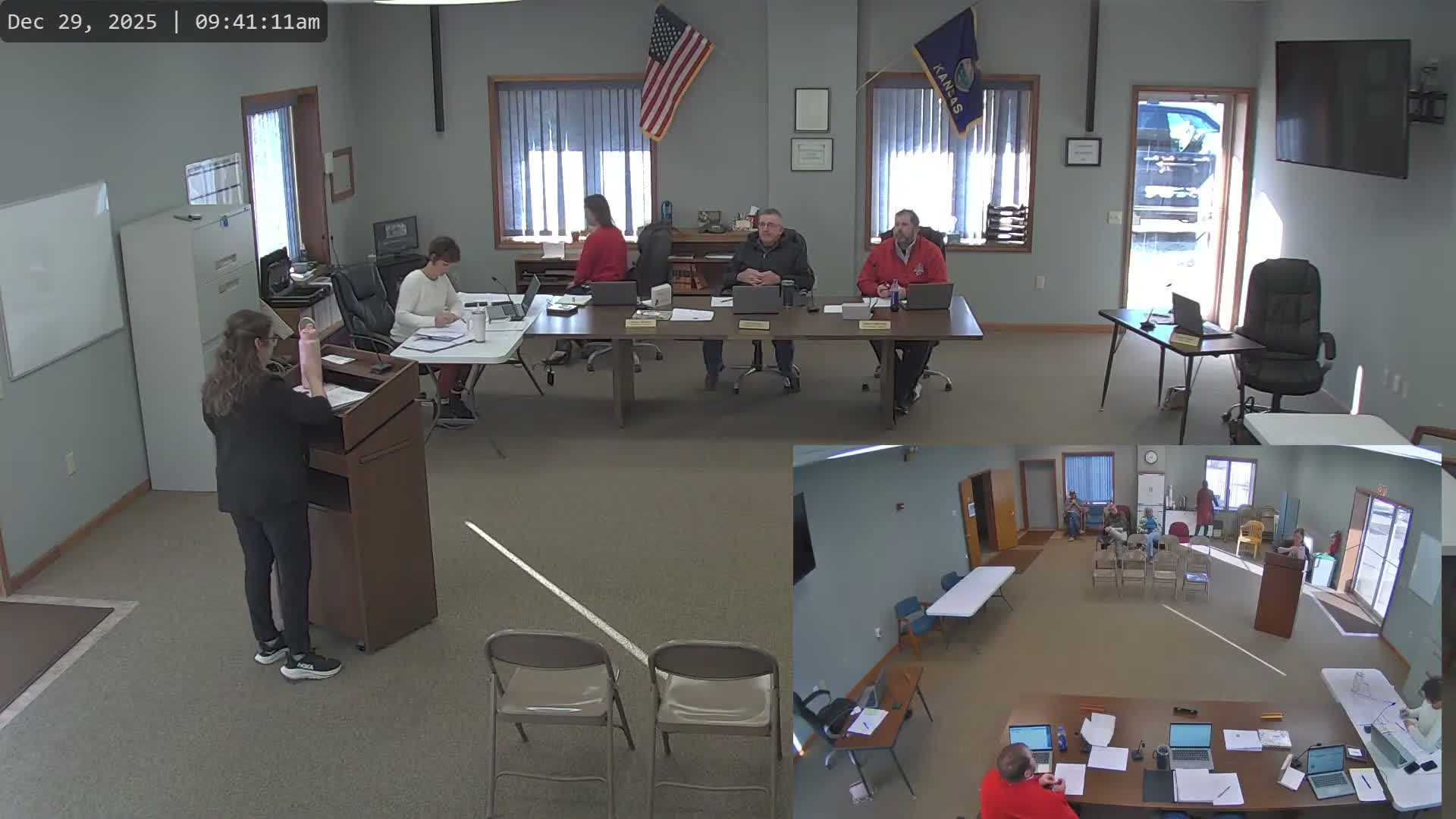
Summary
At a Dec. 29 Linn County Commission meeting, Tisha Coleman, a Linn County resident and member of the Southeast Kansas Mental Health board, outlined rapid growth at the center and defended compensation practices. Commissioners pressed for clearer records, local service metrics and the origin of recent executive pay increases.
Tisha Coleman, a Linn County resident and member of the Southeast Kansas Mental Health board, briefed the commission on the center’s rapid expansion and its approach to compensation, and said she would return with requested documentation. “My intent today is to share what I’ve learned through asking questions and serving on the board,” Coleman told commissioners.
Coleman presented historical and recent statistics she said were drawn from board materials and public filings: she said served individuals increased from about 3,679 in 2015 to roughly 25,906 in 2024–25, services rose from about 117,000 to 313,000 annually, staff numbers grew from roughly 208 to about 583, and the organization’s budget expanded, which she summarized as moving from the millions to tens of millions of dollars. Coleman said county funding historically paid indigent care and represented “less than 1%” of the center’s budget and that salary decisions were informed by independent wage studies and state cost reports.
Commissioners acknowledged those service gains but repeatedly pressed for documentation tying organizational spending to direct local results in Linn County. One commissioner asked bluntly, “Why are we paying the CEO almost $900,000?” and said the commission had not been able to trace when or how large executive compensation increases were approved. Another commissioner said they had been told the CEO’s salary was in the “upper four hundreds” by phone, a contrasting figure offered during the meeting.
Coleman said she had not been present during the period when some changes were made and therefore could not fully explain earlier board votes; she pledged to return with bylaws, appointment records and service‑level data. Commissioners tasked Coleman to check the bylaws and report back next week with the end date of her appointment and any clarifying documentation.
The exchange highlighted two separate issues for the commission: (1) requests for documentary evidence about how executive compensation changed and who on the regional board approved it, and (2) local measures of the center’s effectiveness in Linn County (for example, jail‑based services, crisis response and follow‑up). Coleman described several program expansions — including 24/7 crisis response, school‑based services and integrated primary/dental care at some sites — and said that improved staffing and new services had reduced wait times in many programs.
No formal vote or policy change occurred; commissioners directed Coleman to gather records, confirm appointment dates and return with specific metrics and bylaws language. The commission did not adopt or withhold county funding during the meeting.