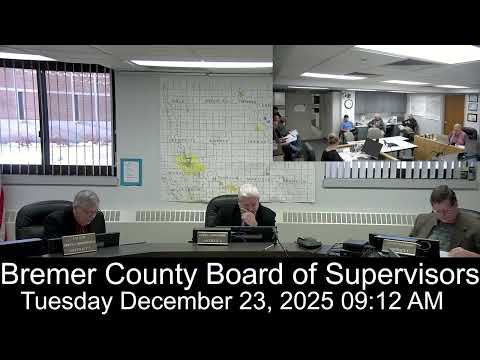
Bremer County supervisors hear proposal for county-funded EMS 'fly car' pilot
Loading...
Summary
County staff and EMS stakeholders presented a proposal for a county-employed, non-transport 'fly car' advanced EMT/paramedic cross-rostered to local services as a 1–2 year pilot; board directed staff to return with budget scenarios and oversight plans after questions on cost and authority.
Bremer County supervisors on Tuesday heard a detailed proposal from their EMS advisory group to create a county-employed EMS coordinator who would operate a non-transport "fly car" to provide advanced on-scene care, training and countywide coordination.
The presenter, identified in the transcript as an EMS advisory representative, said the coordinator would be cross-rostered with local services, would not perform patient transport and would respond simultaneously with local crews when higher-level clinical skills are needed. The proposal described the role as a mix of direct response, training, grant writing and coordination aimed at reducing response times and supporting struggling volunteer services.
"This position is really to help support the army in place systems," the EMS presenter told the board, saying the role would improve the likelihood of advanced care for patients and allow each service to retain autonomy. The presenter recommended a 1– to 2‑year pilot and monthly and quarterly oversight metrics to assess whether the model reduces gaps in coverage.
Board members pressed for operational and legal clarity. One supervisor asked what authority the county employee would have when arriving on scene; the presenter said formal written agreements would be required and that the coordinator would be cross‑rostered as a member of participating services. The presenter also said the fly car would carry advanced equipment so it could deliver higher-level care if local crews arrived without a paramedic.
County staff identified cost and funding questions. A finance staff member estimated initial first‑year costs "just to start off" at about $300,000 for wages, benefits and setup; ongoing costs would be wages, benefits and insurance. Presenters and supervisors discussed possible funding sources — one‑time fund balance to seed startup, city contributions on a per‑capita basis, or ultimately a levy — and emphasized the group’s motion to avoid taking existing EMS operating dollars away from local services.
Supervisors asked for an oversight structure and accountability measures. The EMS presenter and other speakers recommended a subgroup made up of service directors and EMS‑minded community members to evaluate the position, collect data, and hold monthly or quarterly meetings to review progress.
After extended discussion the board directed the EMS advisory group to prepare budget templates, work with county finance on startup and ongoing cost scenarios, and meet jointly with city officials and clerks to discuss potential cost sharing. A possible July 1 start date was discussed if the proposal is budgeted.
The board did not take a formal vote to create the position during the meeting; members instead asked staff and the advisory group to return with the requested financial scenarios and a recommended oversight structure.