Get Full Government Meeting Transcripts, Videos, & Alerts Forever!
Get email alerts on the Alternative Energy Ordinance topic
No spam. Unsubscribe anytime.
Oliver County reviews draft alternative‑energy ordinance with new noise, bonding and decommissioning provisions
Summary
County officials reviewed detailed edits to a draft ordinance regulating solar, wind and utility‑scale facilities: proposed changes include clearer permitting sections, noise‑study standards, vegetation and glare rules, and a $100,000 upfront bond plus decommissioning cost coverage; staff will research PSC interactions and bond language.
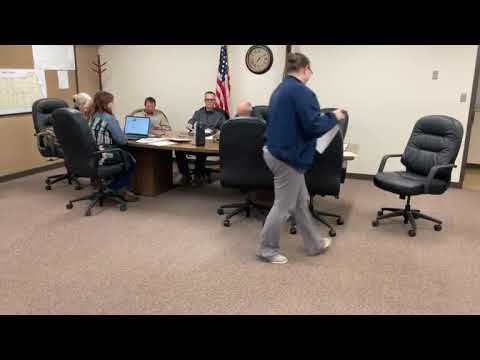
Oliver County commissioners and staff spent the meeting reviewing detailed edits to a draft alternative‑energy ordinance intended to apply to solar, wind and other utility‑scale energy facilities.
The reviewer said she had reorganized the draft to add numbering and a preamble consistent with the county’s existing ordinances and to reuse language the county already applies to wind projects. She said the edits remove the county’s alternative energy construction permit classification so those projects will follow building‑permit rules instead.
Why it matters: the draft clarifies application and design standards and adds requirements that could affect where and how large projects are sited in Oliver County, including noise‑study standards, vegetation and glare controls, setbacks for electrical lines and decommissioning requirements that would require financial assurances.
On noise studies, the group debated whether to require evaluations by a licensed North Dakota acoustical engineer or an Oliver County–verified environmental impact study; participants also discussed including a provision for independent third‑party review tied to Public Service Commission (PSC) materials. "We should still have the protection for the possibility of things that PSC doesn't cover," an unidentified speaker said, arguing the county needs a fallback if state oversight is incomplete.
Financial surety drew particular attention. The draft mirrors language from the county’s wind ordinance that calls for a $100,000 upfront cash bond plus 100% of estimated decommissioning costs, updated every five years. Staff agreed to research whether PSC financial assurances could substitute for county bonds and to return with recommended language. "I'll go back and just look at that," an unidentified speaker said, noting the county may need a different approach for solar projects.
Speakers also discussed how the comprehensive plan might be used to identify appropriate industrial areas for data centers and battery facilities — pointing to existing industrial nodes near power plants or substations as potentially preferable to siting such projects amid active farmland. Participants referenced local examples, noting that placement and planning can affect resident impacts and utility costs.
No ordinance vote was taken. Commissioners directed staff to verify PSC rules and to bring back clarified bond and decommissioning language at a future meeting for further consideration.
What's next: staff will research financial‑assurance options and PSC interactions and return with revised language; no formal action on the ordinance was recorded at this meeting.